 By Dr. Meir Tako, DC, CCSP · Updated · 6 min read
- Shockwave is mainly for plantar fasciitis that has lasted months and hasn't improved with rest, stretching, footwear changes and insoles.
- Most people need 3 to 5 weekly sessions of 10 to 20 minutes, and the full effect often builds over two to three months after the course.
- Results vary, so be wary of any single success rate. Treating what overloads the heel matters as much as treating the heel itself.
- It isn't used during pregnancy, with oral steroids, within two weeks of a steroid injection, or over a blood clot, malignancy, open wound or infection.
Shockwave therapy sends acoustic pressure waves into the plantar fascia to help restart repair in chronic heel pain. It's usually considered when plantar fasciitis hasn't improved after months of rest, stretching and footwear changes. Most people need 3 to 5 weekly sessions, results build over two to three months, and it isn't suitable for everyone.
When is shockwave worth trying for plantar fasciitis?
Shockwave is usually worth considering when heel pain has lasted several months and hasn’t settled with the basics: less load, calf and arch stretching, better footwear and insoles. It isn’t usually the first thing we reach for with heel pain that started last week.
Most plantar fasciitis improves with simple, consistent care. The cases that don’t are the ones that stall. You’ve done the stretches, bought the shoes and rested for weeks, and the first steps out of bed still hurt. That’s the group shockwave is meant for. It also suits people who want to try a non-invasive option before talking with their doctor about injections or surgery.
If you’re not sure your heel pain is plantar fasciitis at all, start with our plantar fasciitis page. It covers symptoms, causes and the warning signs that need a medical doctor first.
How does shockwave therapy help plantar fasciitis?
Shockwave is thought to restart a healing process that has stalled at the heel. Long-standing plantar fasciitis is less about inflammation and more about tissue that has thickened and stopped repairing itself well.
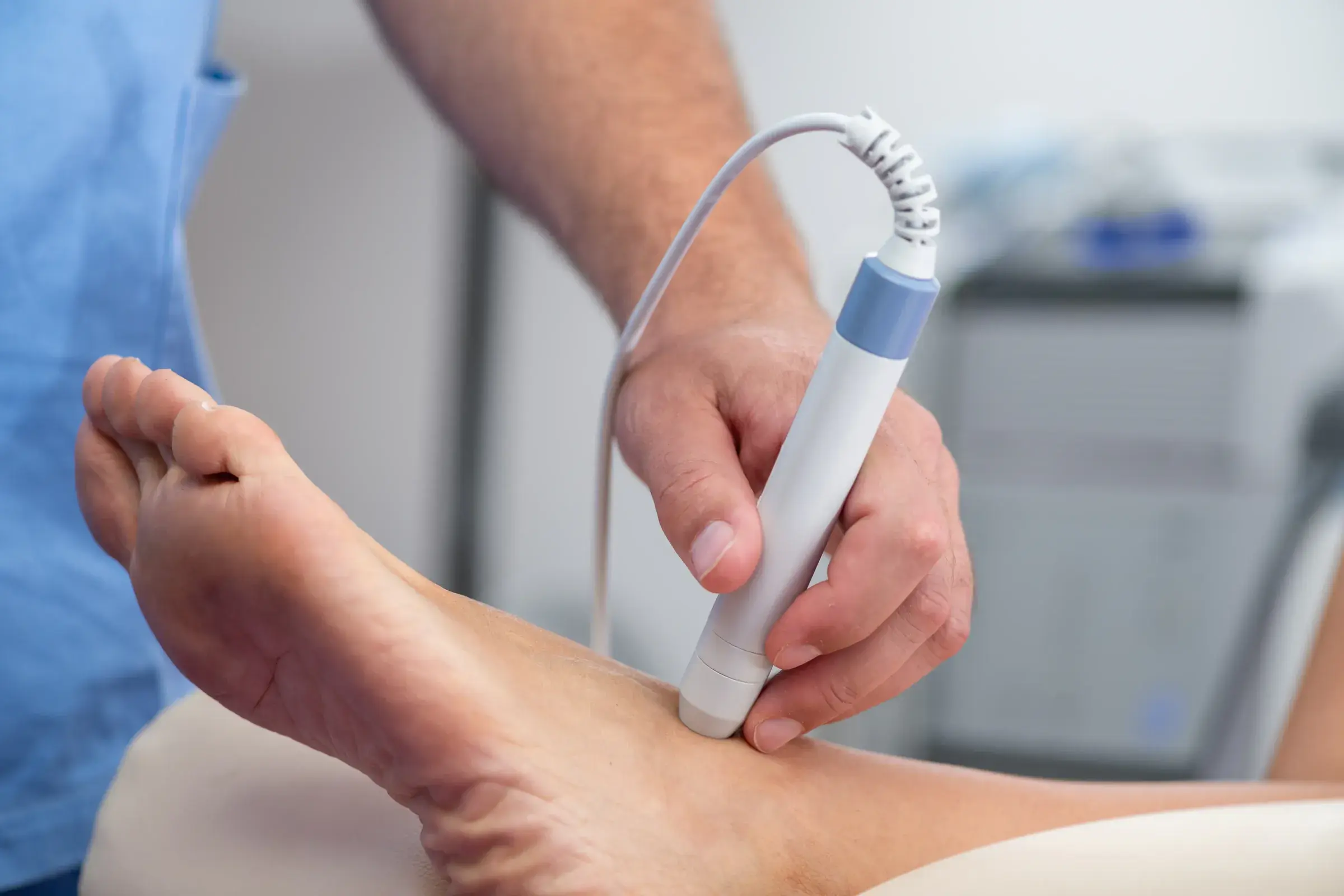
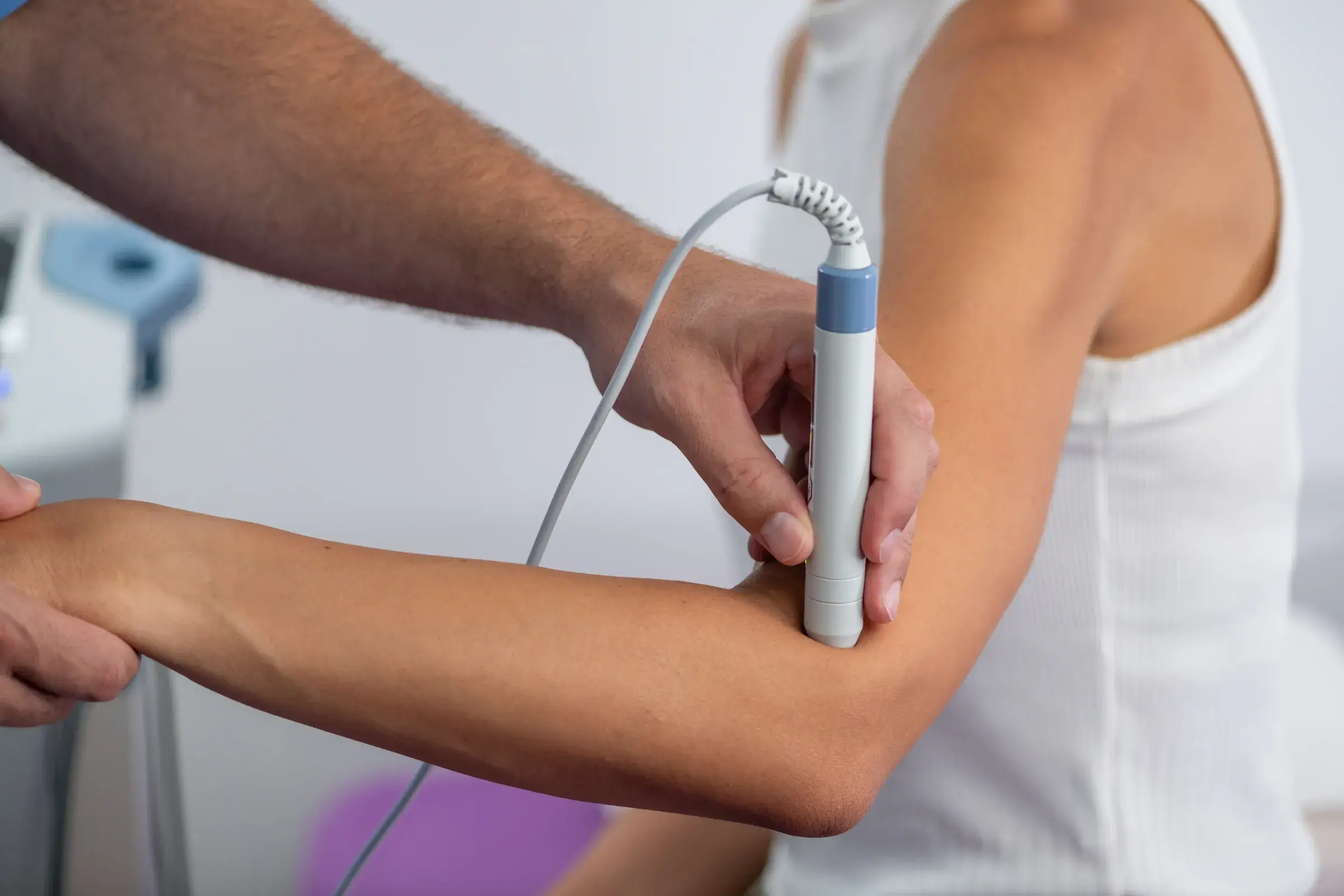
The pressure waves are delivered where the fascia attaches to the heel bone and along the sorest parts of the arch. They’re thought to increase local blood flow, prompt the tissue to remodel, and calm over-sensitive pain nerves in the area. The full explanation of the technology is on our EPAT shockwave therapy page.
What shockwave doesn’t do is change why your heel got overloaded. That’s why Dr. Tako pairs it with work on the foot, ankle and hip mechanics behind the problem. The same idea applies to other stubborn tendon problems, covered on our tendinitis page.
How many shockwave sessions do you need for plantar fasciitis?
Most people need 3 to 5 sessions, about one week apart, each lasting 10 to 20 minutes. Heel pain that has been around for years may need more.
Here’s what a typical course looks like with us:
- Before the first session. An evaluation to confirm it’s plantar fasciitis, check for anything that rules shockwave out, and find the mechanics loading your heel.
- Each session. We locate the most tender spots on the heel and arch, treat them, and adjust the intensity to what you can tolerate.
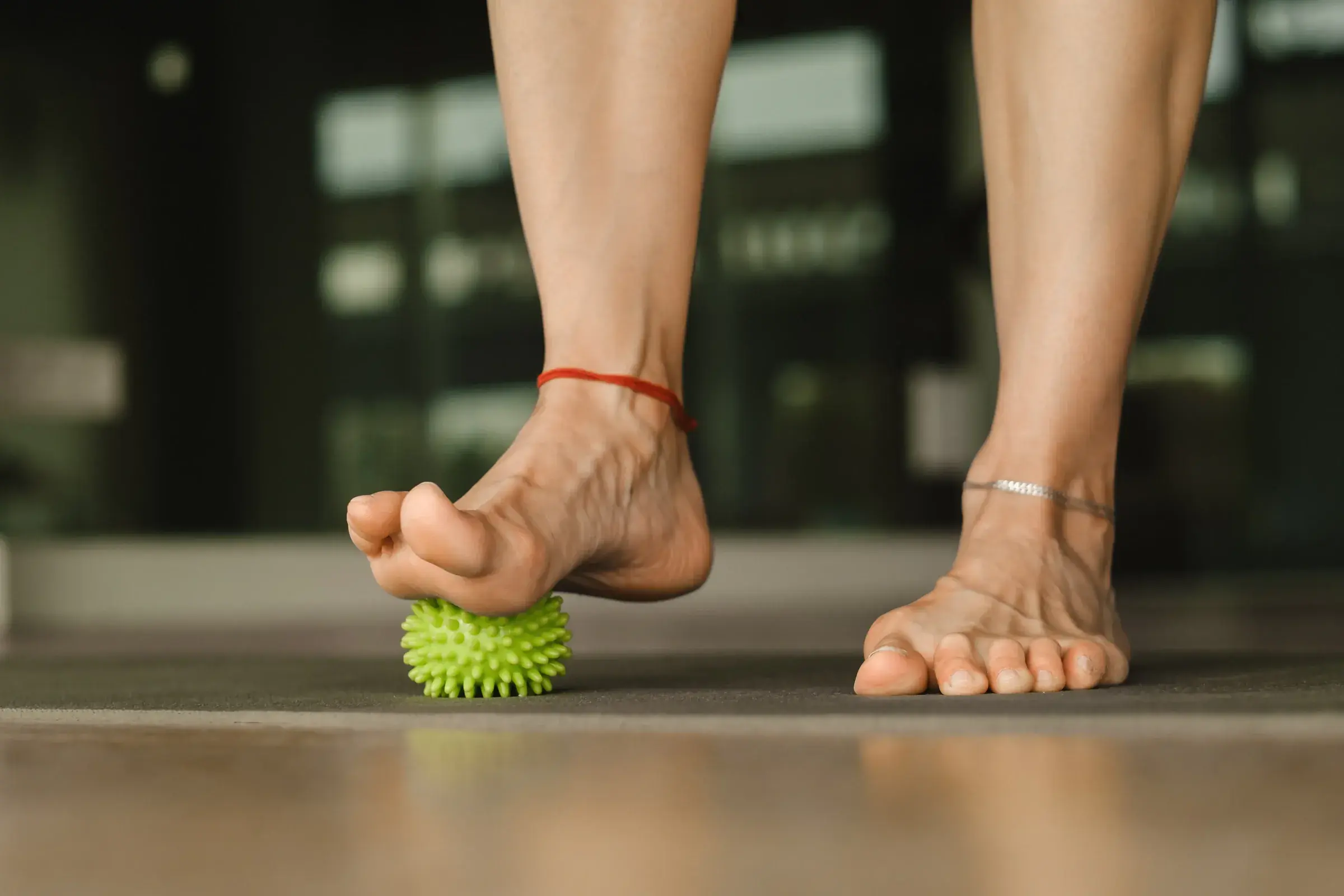
- Between sessions. You keep moving, with a plan for how much walking, standing and running makes sense that week, plus calf and foot exercises.
- After the last session. A follow-up to review progress, because the tissue keeps responding after the course ends.
The week between sessions gives the tissue time to respond to each treatment.
How long does shockwave take to work for plantar fasciitis?
Some people notice their morning heel pain easing within the first few sessions, but the full effect often builds over two to three months after the course ends. Shockwave stimulates repair, and repair is slow.
This matters for your expectations. Still being sore after session three doesn’t mean it isn’t working. Dr. Tako checks your progress at every visit using things you can feel: your first steps of the day, how long you can stand, and how your heel responds to walking or a run.
If there’s no change at all by the end of the course, that’s useful information too. It’s a sign to look again at the diagnosis, or at what’s still overloading the heel.
What is the success rate of shockwave for plantar fasciitis?
There’s no single honest success rate to quote. Research suggests shockwave can reduce pain and improve function in many people with chronic plantar fasciitis, especially when other conservative care hasn’t worked, but results vary between studies and between people.
You may see a range of percentages online. Treat any single figure with caution. Studies use different devices, energy levels, numbers of sessions and definitions of “success,” so a number from one study rarely applies neatly to your heel.
In our experience, people tend to do better when they follow the plan between sessions and deal with the reason the heel was overloaded. Going straight back to full mileage, or treating the heel while ignoring a stiff ankle, tends to slow things down.
Does shockwave therapy for plantar fasciitis hurt?
It’s usually uncomfortable rather than painful. The heel is a sensitive spot, so the first session tends to be the most intense, and the intensity is adjusted to what you can tolerate.
Most people describe a strong, rapid tapping over the sorest points. No anesthesia is needed, and many people find later sessions easier as the tissue becomes less tender.
Afterward, your heel may feel bruised or achy for a day or two. That’s common and usually settles on its own. On treatment day, it’s sensible to keep walking normally but skip your hardest run or longest stretch on your feet. Tell us at the next session how your heel felt, so we can adjust the intensity.
What are the side effects, and who shouldn’t have it?
Side effects are usually mild and short-lived: redness, tenderness, swelling or bruising around the heel for a day or two. You can walk out and go about your day.
Shockwave isn’t used:
- During pregnancy
- Over a blood clot (DVT) or a malignancy in the area
- While you’re taking oral steroids
- Within two weeks of a steroid injection, which matters here because cortisone shots in the heel are common for plantar fasciitis
- Over open wounds or an active infection
Tell Dr. Tako before treatment if you take blood thinners, have a bleeding disorder, or have nerve problems in your feet, including from diabetes. Heel pain with numbness, burning or tingling across the sole, a hot and swollen heel, or pain after a fall needs a medical doctor first.
What finally helps plantar fasciitis that won’t go away?
Usually it’s a combination, not one treatment. When stubborn heel pain finally turns around, it’s often because the irritated tissue and the reason it was overloaded were treated at the same time.
With his own background in competitive running, Dr. Tako looks at how you actually walk and run, not just at the sore spot. A common pattern: someone has had months of heel-focused care, but an old ankle sprain left the ankle stiff, so the arch flattens harder on every step. Shockwave helps the heel tissue. Restoring ankle movement takes the strain off.
The other pieces that matter are gradual changes to running volume or standing time, calf and foot strength, footwear that suits your foot, and patience while the tissue remodels.
How much does shockwave therapy for plantar fasciitis cost?
Cost depends on whether you pay per session or for a package, and how many sessions your heel needs. Shockwave is often not covered by insurance, though many people can use HSA or FSA funds.
We cover pricing, insurance and whether it’s worth it in Is Shockwave Therapy Worth It? Cost, Insurance & Side Effects. Our current prices are on the shockwave therapy page. To find out whether you’re a good candidate, start on our new patients page.

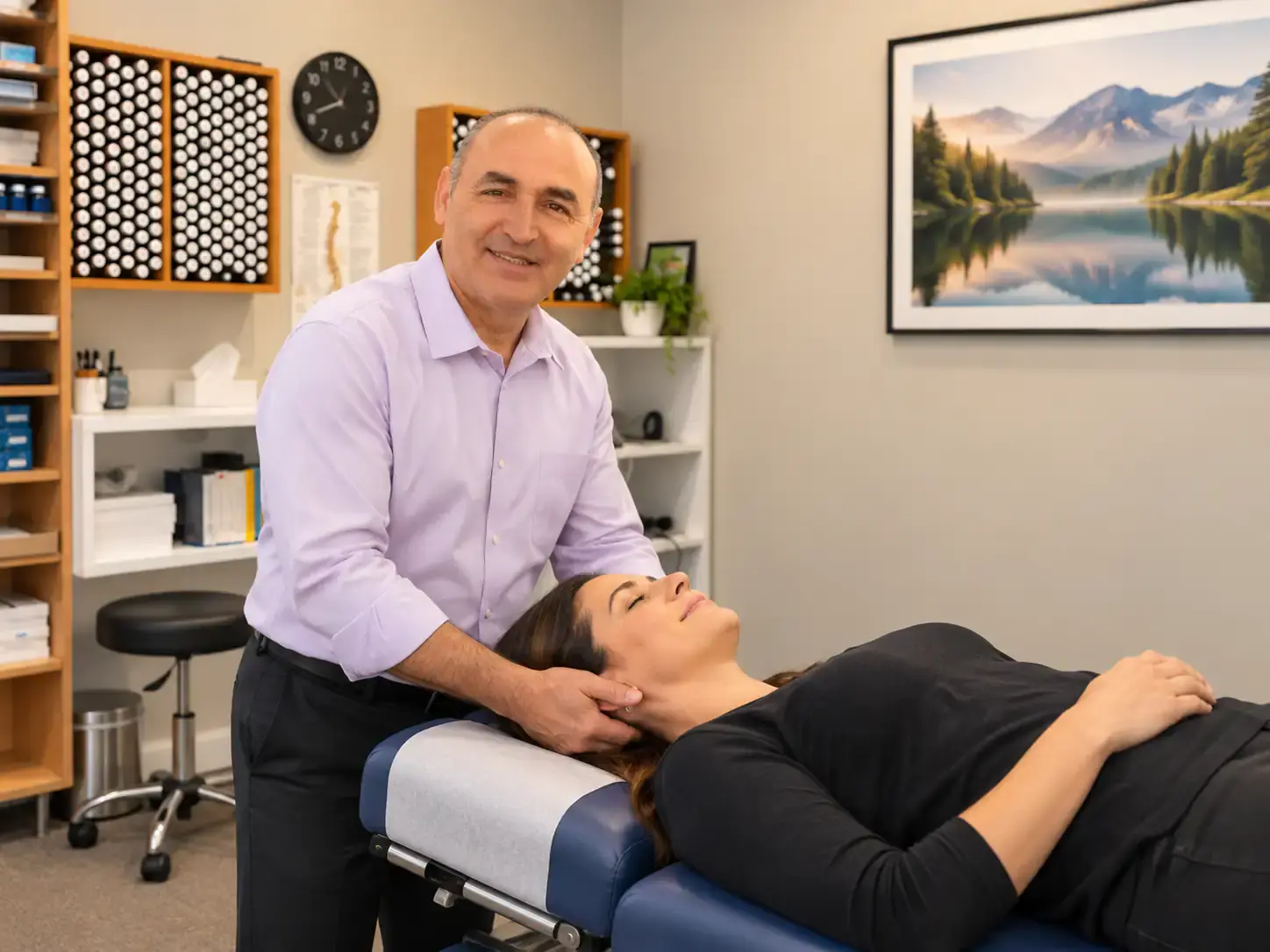
Dr. Meir Tako, DC, CCSP
Sunnyvale chiropractor since 1998, Certified Chiropractic Sports Practitioner and competitive runner. About Dr. Tako →
Educational content; not a substitute for medical advice. Individual results vary.