 Medically reviewed by Dr. Meir Tako, DC, CCSP · Updated
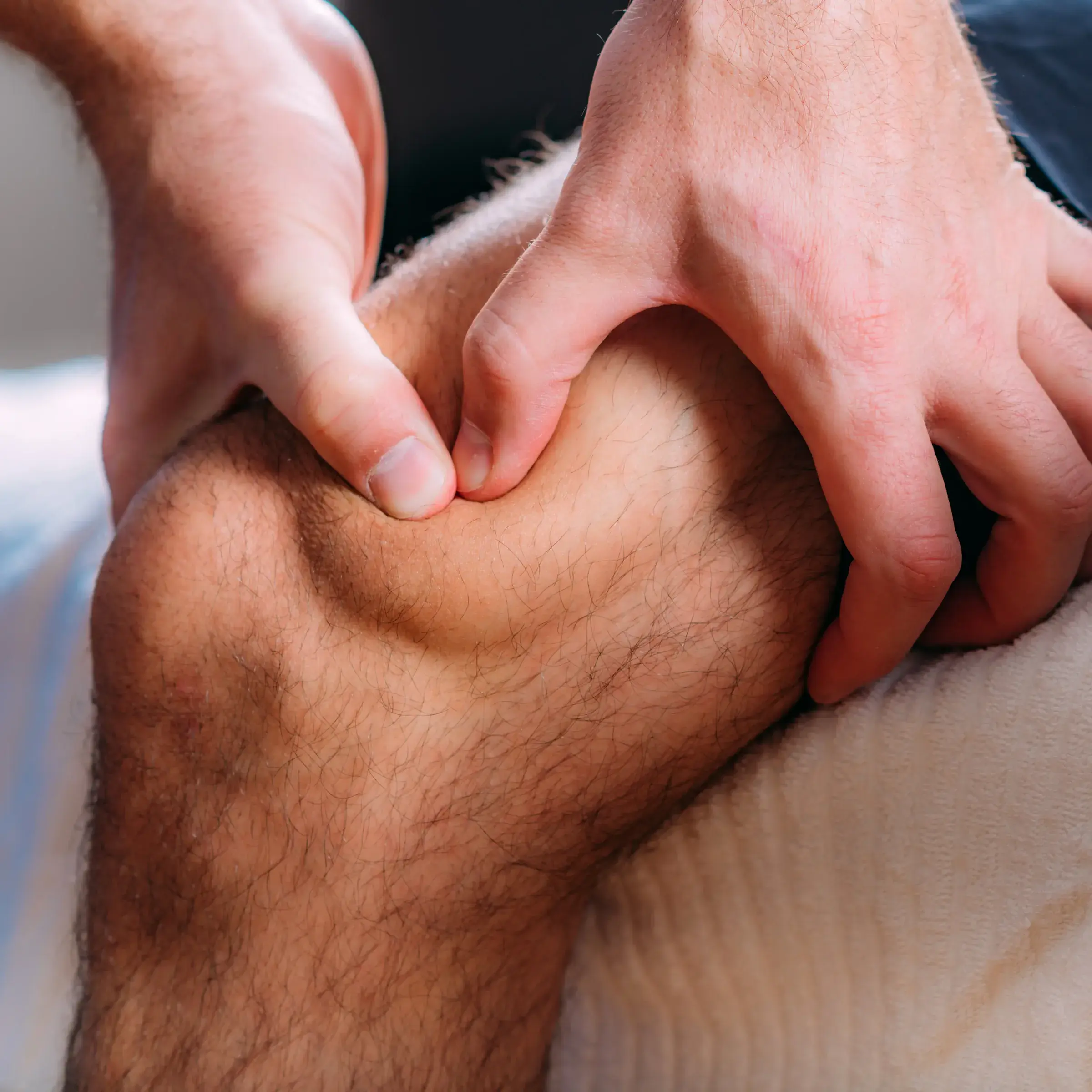
Knee pain in active people usually comes from overload of the kneecap joint, the patellar tendon or the IT band, often because the hip or foot isn't controlling the knee well. Chiropractic care can help with these mechanical problems and with recovery after surgery. The first step is an evaluation of the knee, hip and foot together.
Why does my knee hurt?
Your knee is a hinge caught between two bigger joints. Above it, the hip controls which way the thigh turns. Below it, the foot and ankle decide how the shin rotates and how force comes up from the ground. The knee mostly does what it’s told.
That’s why so much knee pain shows up without any single injury. When the hip or foot stops controlling the leg well, the knee absorbs the difference, run after run and stair after stair. The kneecap joint, the patellar tendon and the IT band on the outside of the thigh are the usual places that complain. Treating the sore spot can calm it down, but the load keeps coming back until the real driver is addressed.
Common symptoms
- Aching around or behind the kneecap, worse on stairs, squats or hills
- Pain after sitting for a while with your knees bent (sometimes called the “theater sign”)
- Sharp pain on the outside of the knee partway into a run, often at the same mileage each time
- Pain just below the kneecap when you jump, land or start running
- Stiffness or a feeling that the knee isn’t fully straightening, especially after surgery
- Clicking or grinding without much pain, which on its own is usually not a concern
What causes it?
The most common causes of knee pain in active people include:
- Patellofemoral pain (runner’s knee). The kneecap joint gets overloaded, often from a jump in training, more hills or stairs, or poor hip control.
- IT band syndrome. Irritation on the outside of the knee, common in runners and cyclists, usually tied to hip strength and training load.
- Patellar tendinopathy (jumper’s knee). The tendon below the kneecap gets overloaded by jumping, sprinting or heavy squatting.
- Recovery after injury or surgery. After a ligament or meniscus repair, the knee may heal well while the hip, ankle and muscle activation around it lag behind.
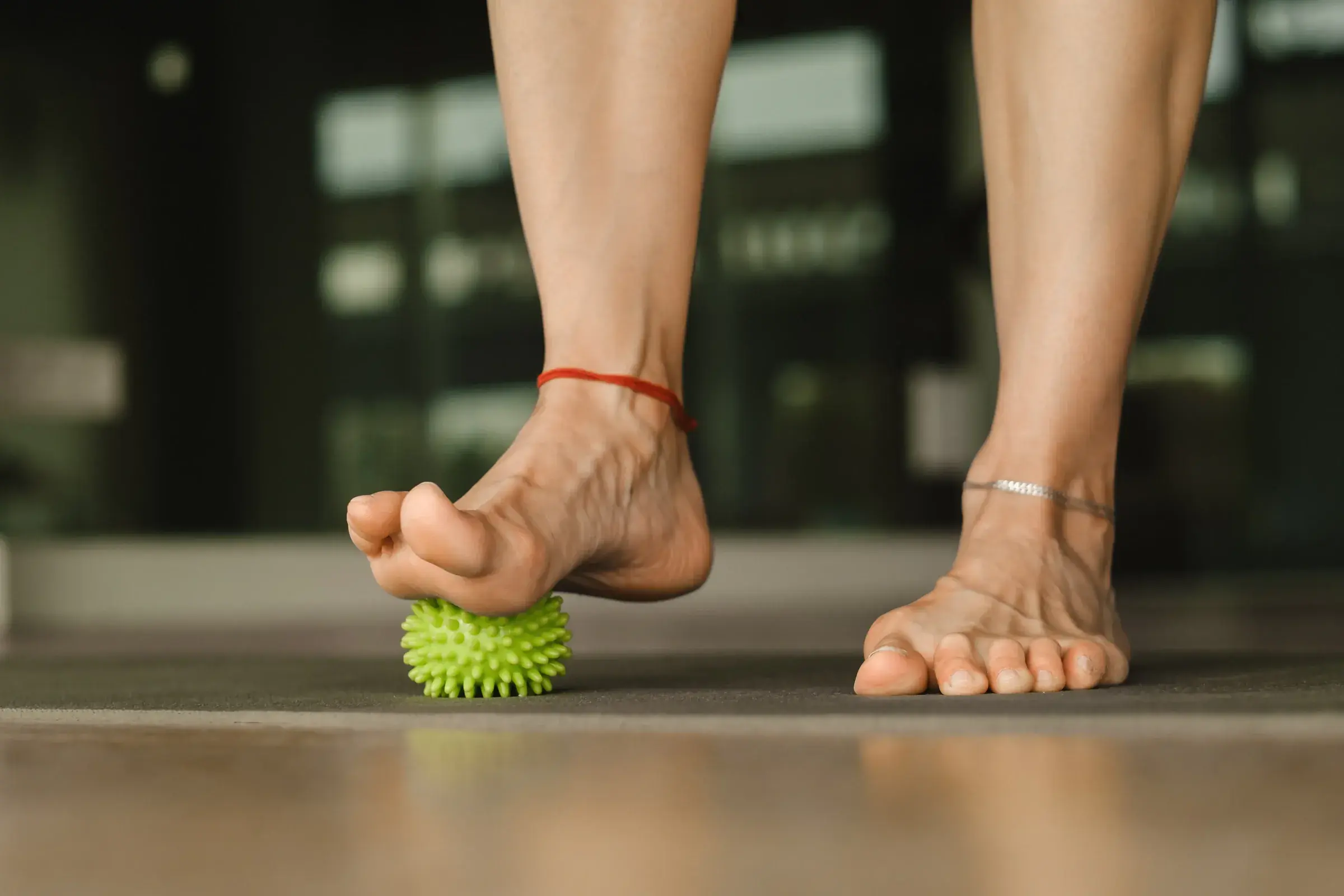
- Old injuries and compensations. An ankle sprain that never fully recovered, flat or rigid feet, or a stiff hip can change how the knee tracks. Over time, the knee carries the extra load.
How Dr. Tako finds the source
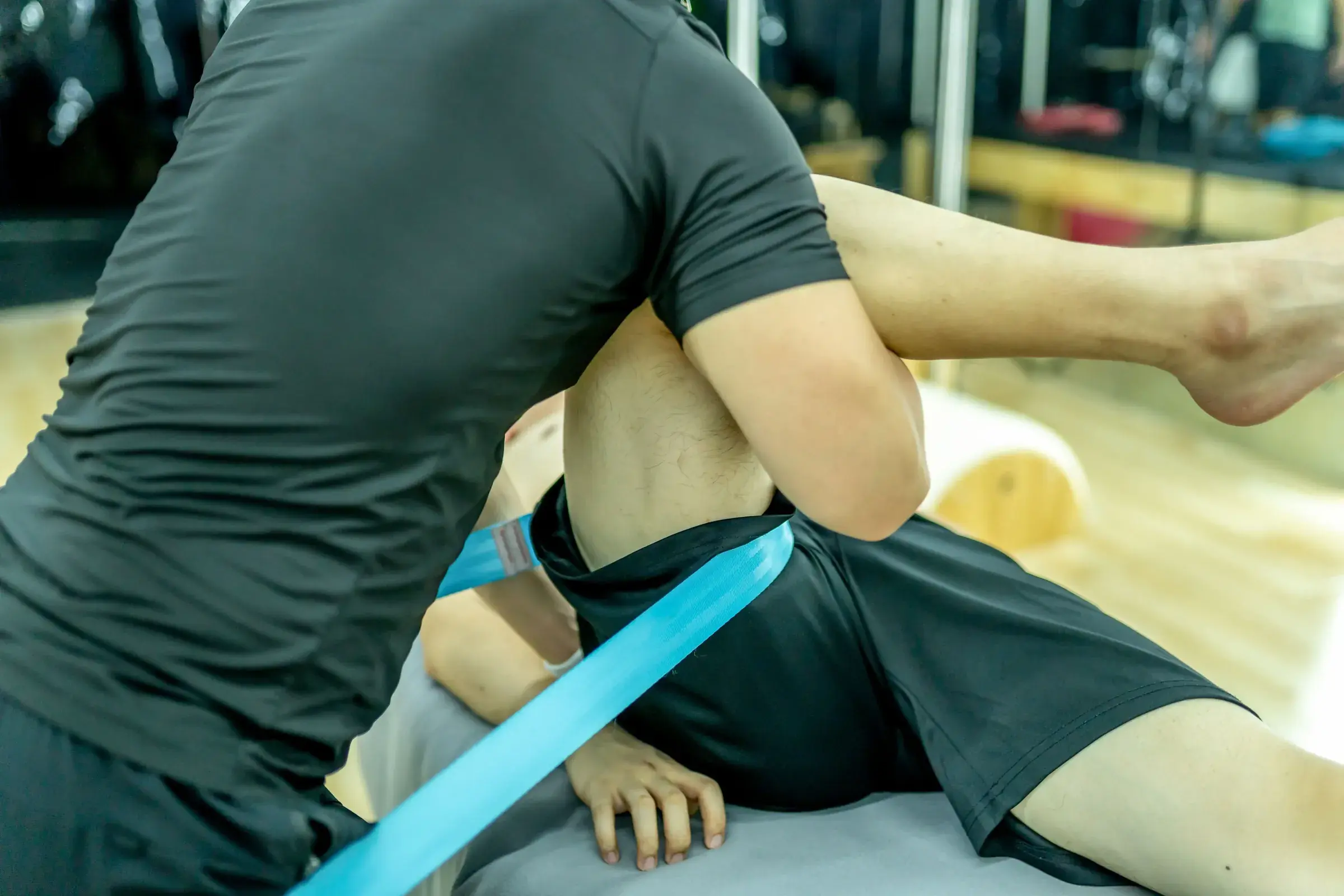
Knee pain often starts somewhere else. Dr. Tako’s evaluation looks at how your hips, knees, ankles and feet work together, not only at the joint that hurts.
A common example: a runner with pain at the front of the knee who sprained the same ankle years ago. The ankle never regained full bend, so on every stride the foot rolls in and the knee collapses slightly inward. Another: a hip that tests weak on one side, letting the thigh drift inward and loading the outside of the knee. In both cases the knee is the victim, not the cause.
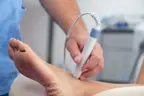
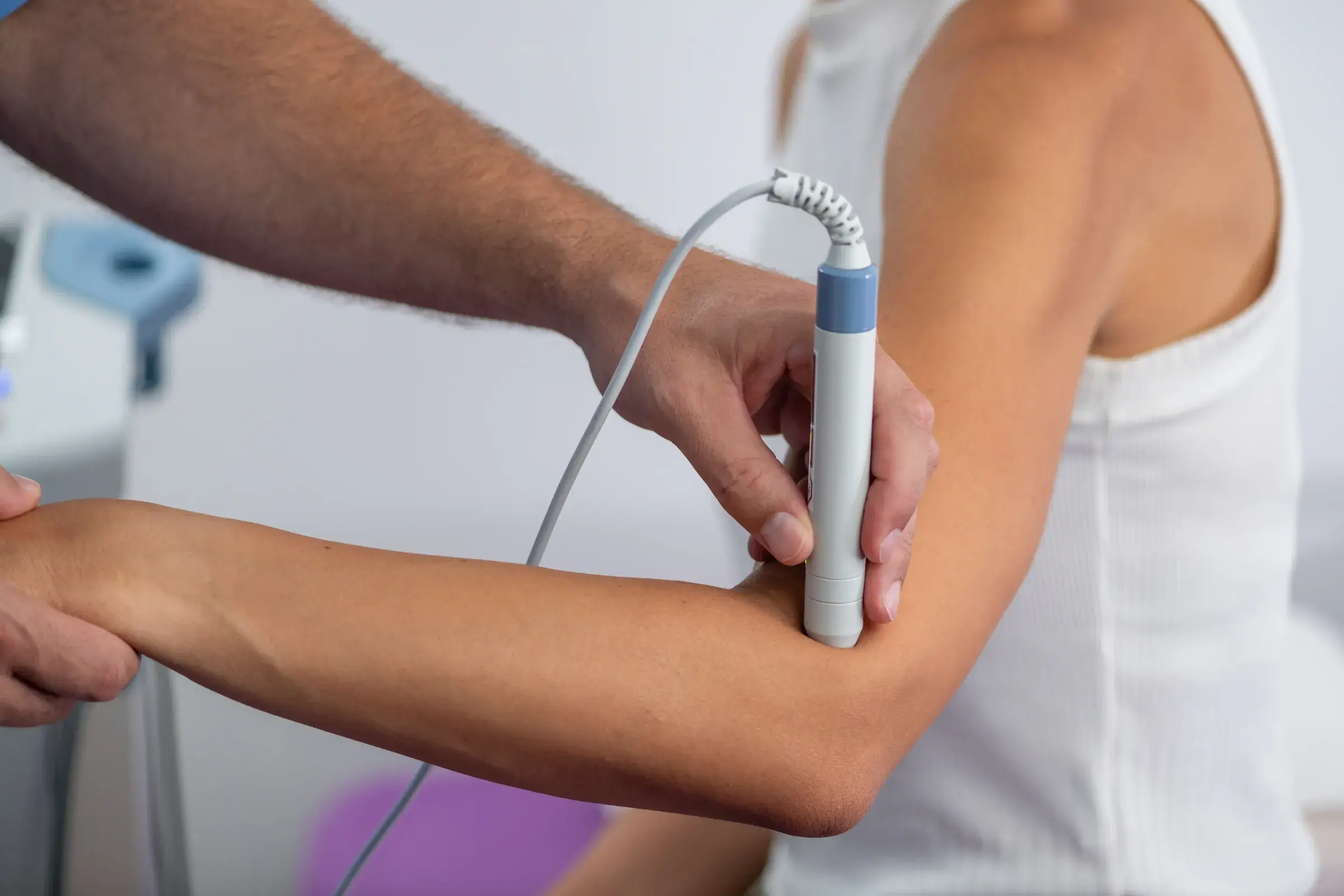
The evaluation typically includes your history (including old injuries and surgeries), how you squat, step and run, joint testing and muscle strength testing. Dr. Tako also uses P-DTR, a functional neurology method that tests how the nervous system responds to specific areas. After an injury or surgery, the nervous system can keep muscles around the knee switched “off” as a protective pattern, even after the tissue has healed. Finding and resetting those patterns is often what moves a stalled recovery forward. For a stubborn patellar tendon, EPAT shockwave may also be part of the plan.
The goal is a clear answer to three questions: what is overloading the knee, why it started, and what will keep it from coming back.
Knee pain in runners, athletes and people coming back from surgery
For runners, knee pain usually follows a change: more miles, more hills, new shoes, a race block. Dr. Tako has a background in competitive running himself and looks at how you actually run, not just how you move on the table. The plan includes what to keep doing, what to pause and how to build mileage back without the pain returning. Many runners are able to keep some form of training during care.
For field and court athletes, cutting, jumping and landing put the knee under load the hip and ankle have to control. Gaps in that control show up quickly.
After surgery, the work is different. You may be cleared by your surgeon and still feel that the leg isn’t yours: hesitant, weaker, or compensating with the hip or other leg. That’s the stage where a whole-body evaluation can help, working alongside your physical therapy, not replacing it.
When to seek urgent care instead
Go to urgent care or the emergency room for a knee that is hot, red and swollen with fever, a knee that looks deformed or can't bear weight after an injury, or calf pain and swelling, which can signal a blood clot. Rapid swelling within hours of a twist or pop, or a knee that locks or keeps giving way, should be checked by a medical doctor first.
"When I first came to Dr. Tako I was 8 months post surgery from a repair to the entire lateral compartment of my knee. The progress I made with Dr. Tako over the next couple months was outstanding."
— Nick Jones, Football player · L.A. Rams
This page is for education and isn't a substitute for a medical diagnosis. Individual results vary.