 Medically reviewed by Dr. Meir Tako, DC, CCSP · Updated
Sciatica is pain that travels along the sciatic nerve, from the lower back through the buttock and down the leg. Chiropractic care can help when the cause is a joint, disc or muscle problem in the lower back or hip. Most patients start with an evaluation to find the source, then a short series of targeted treatments.
What is sciatica?
Sciatica isn’t a diagnosis — it describes where pain travels. The sciatic nerve is the longest nerve in the body. It starts from nerve roots in the lower back, runs through the buttock and continues down the back of each leg to the foot. When something irritates it along the way, pain, tingling or numbness can follow that path.
That’s why two people with “sciatica” can need completely different care. One may have an irritated disc in the lower spine; another may have a tight muscle deep in the hip pressing on the nerve. Treating the leg, or only the low back, often misses the real source.
Common symptoms
- Pain that radiates from the lower back or buttock down one leg, sometimes past the knee
- Burning, tingling or “electric” sensations along the back or side of the leg
- Numbness or weakness in the leg or foot
- Pain that gets worse with sitting, coughing, sneezing or bending forward
- Relief when lying down or walking — or, for some people, the opposite
Sciatica usually affects one side. Symptoms in both legs at once deserve a prompt medical check.
What causes it?
The most common causes of sciatica include:
- Disc problems. A bulging or herniated disc in the lower spine can press on or inflame a nerve root.
- Joint restrictions in the lower back or pelvis. Stiff or poorly moving joints, including the sacroiliac (SI) joints, can irritate nearby nerves and change how load moves through the spine.
- Muscle tension in the hip. The piriformis muscle sits right over the sciatic nerve. When it’s tight or overworked, it can compress the nerve.
- Narrowing of the spinal canal (stenosis). More common after 50, it can cause leg pain that gets worse with standing and walking.
- Old injuries and compensations. An ankle sprain, a knee surgery or a fall years ago can change how you walk and stand. Over time, the body compensates — and the strain ends up in the hips and lower back.
How Dr. Tako finds the source
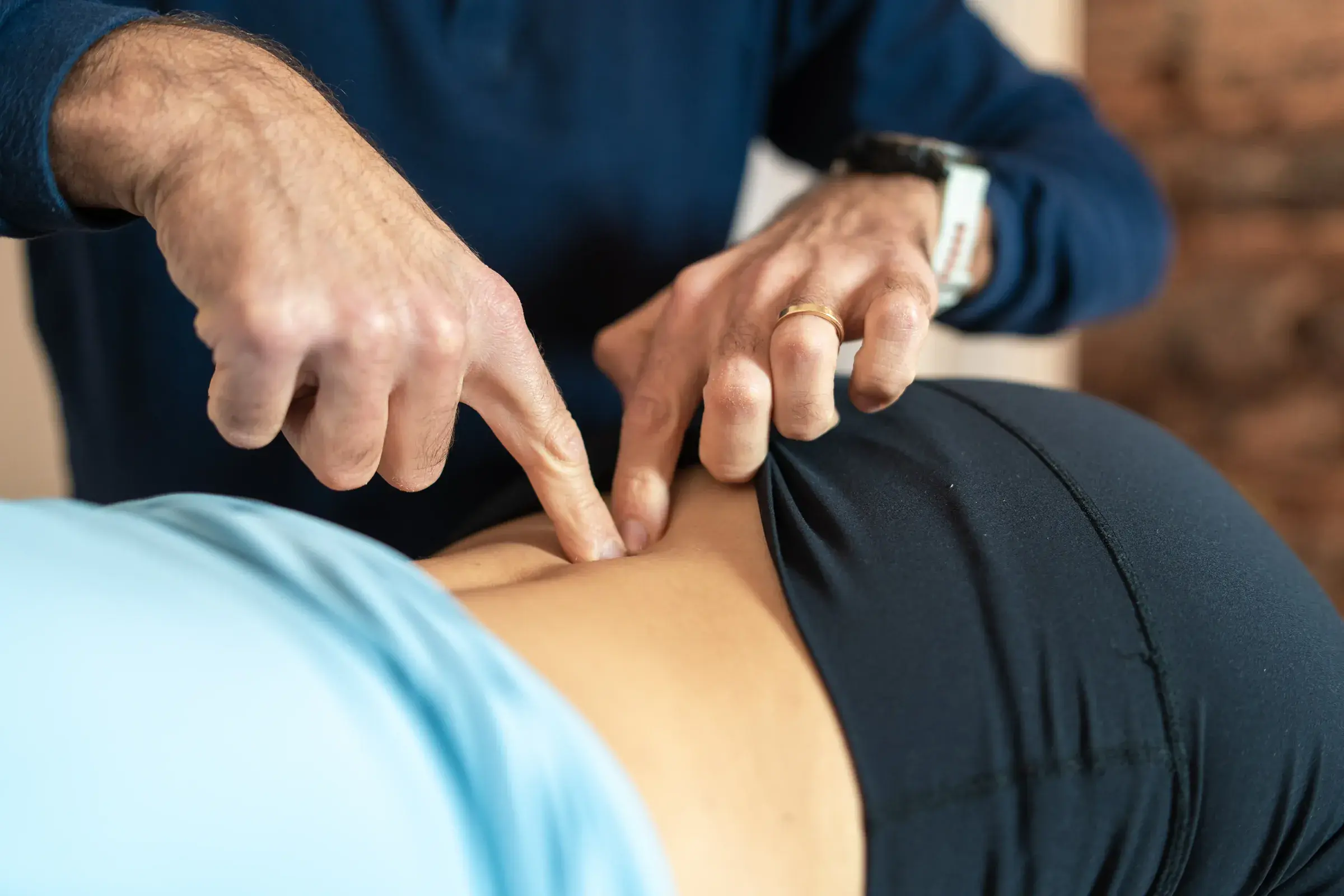
Pain in the leg doesn’t always start in the back. Dr. Tako’s evaluation looks at how your spine, pelvis, hips and nervous system work together, not only at the spot that hurts.
That evaluation typically includes your history (including old injuries), how you move, joint testing, and muscle strength testing. Dr. Tako also uses P-DTR, a functional neurology method that tests how the nervous system responds to specific areas of the body. It can reveal protective patterns — muscles that are switched “off” or held tight — that keep the nerve irritated even after the original problem has settled.
The goal is a clear answer to three questions: what is irritating the nerve, why it started, and what will keep it from coming back.
Sciatica in runners, lifters and active people
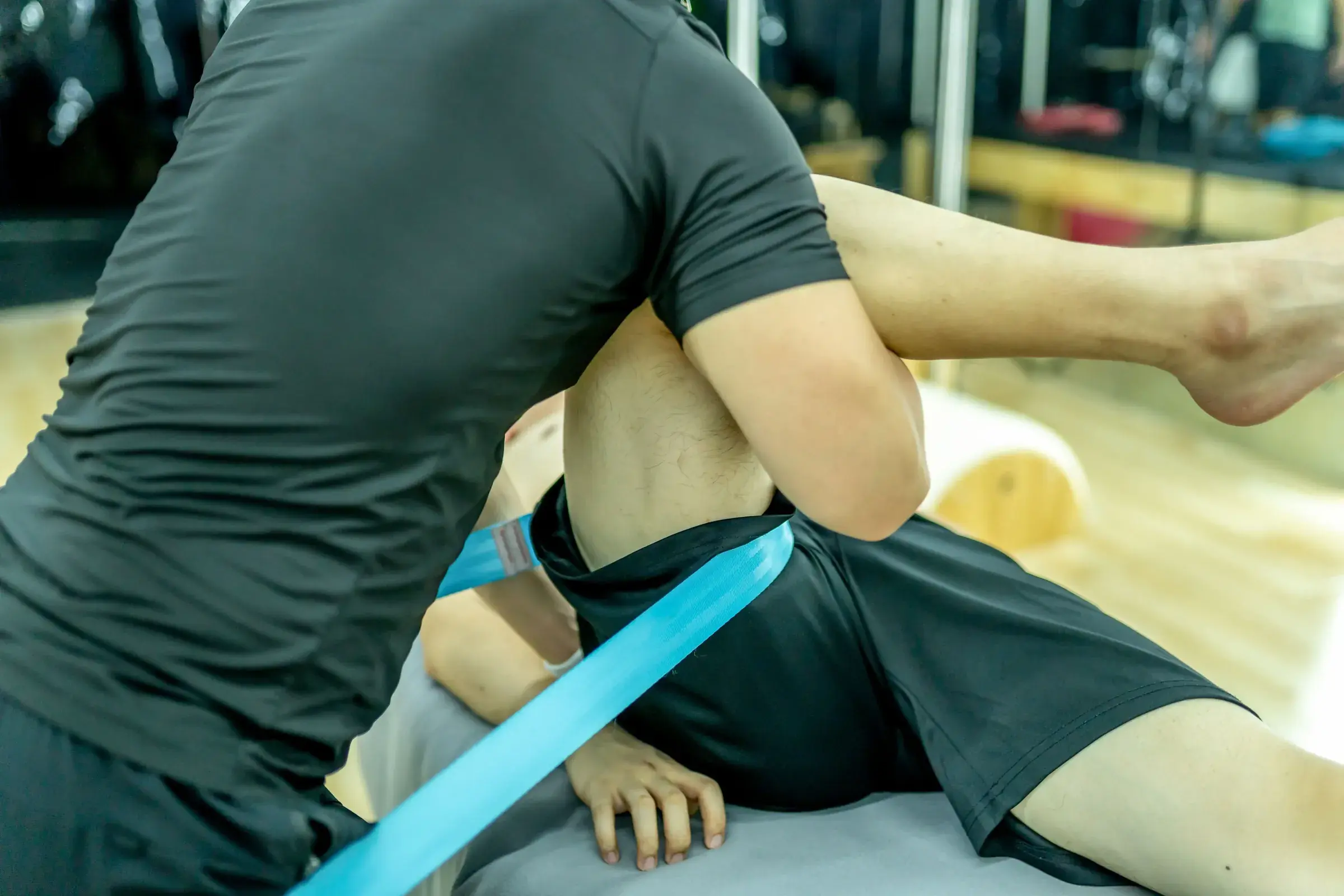
For active people, sciatica is often tied to training load, hip mobility and movement mechanics — long runs on tight hips, heavy deadlifts with a stiff lower back, or hours at a desk followed by intense weekend sport.
Dr. Tako looks at how you move in your sport, not just on the table. Part of the plan is a safe return to training: what to keep doing, what to pause, and how to build back without the pain returning. Many active patients are able to keep some form of training during care.
When to seek urgent care instead
Loss of bladder or bowel control, numbness in the groin or inner thighs, or leg weakness that is getting worse quickly can signal a serious condition called cauda equina syndrome. Go to urgent care or the emergency room right away. Sciatica after a fall or accident, or with fever or unexplained weight loss, should also be checked by a medical doctor first.
"I pulled my back and the pain was so intense, I laid flat on the floor for hours. I saw Dr. Tako and he performed some adjustments which immediately made me feel better. But then he did simple arm and leg strength tests and found the root of the problem."
— Rodson Z., Google review
This page is for education and isn't a substitute for a medical diagnosis. Individual results vary.