 Medically reviewed by Dr. Meir Tako, DC, CCSP · Updated
Tennis elbow, or lateral epicondylalgia, is pain where the forearm muscles attach to the outside of the elbow. It's usually a tendon overload problem, not true inflammation, and most people who get it don't play tennis. Care may combine gradual tendon loading, treatment of the shoulder, neck and wrist, and EPAT shockwave for cases that haven't settled.
What is tennis elbow?
Tennis elbow is pain on the outside of the elbow, where the muscles that lift your wrist and fingers attach to a bony point called the lateral epicondyle. The medical names are lateral epicondylalgia or lateral elbow tendinopathy.
Despite the old name “epicondylitis,” most tennis elbow isn’t mainly inflammation. The tendon has been asked to do more than it can handle, and its fibers become weaker and more sensitive. That’s why anti-inflammatories and rest often give only short relief.
Many cases improve over months with the right loading. Some hang on much longer, especially when the cause of the overload isn’t addressed. Those longer-lasting cases are where a closer look and, sometimes, EPAT shockwave come in.
Common symptoms
- Pain on the outside of the elbow that may spread down the forearm
- Pain when gripping, shaking hands, lifting a mug or turning a doorknob
- Weaker grip, or dropping things more easily
- Pain when lifting with the palm facing down
- Tenderness when pressing on the bony point on the outer elbow
- Morning stiffness in the forearm that eases as you use it
What causes it?
Tennis elbow usually builds from repeated gripping and wrist extension. Common contributors include:
- Desk work. Long hours of typing and mousing, often with the wrist bent back.
- Racquet and paddle sports. Tennis, pickleball and padel, especially with a late backhand or a grip that’s too small or too tight.
- Trades and hobbies. Painting, carpentry, gardening, cooking and using hand tools.
- Lifting and climbing. Pulling, rows and hanging grip work, especially after a jump in training.
- Shoulder, neck and wrist mechanics. A stiff shoulder or upper back, a forward head posture or a stiff wrist can shift extra load onto the forearm muscles.
How Dr. Tako finds the source
The elbow is usually where it hurts, but it’s not always where the problem started. Dr. Tako’s evaluation follows the arm from the neck down to the hand.
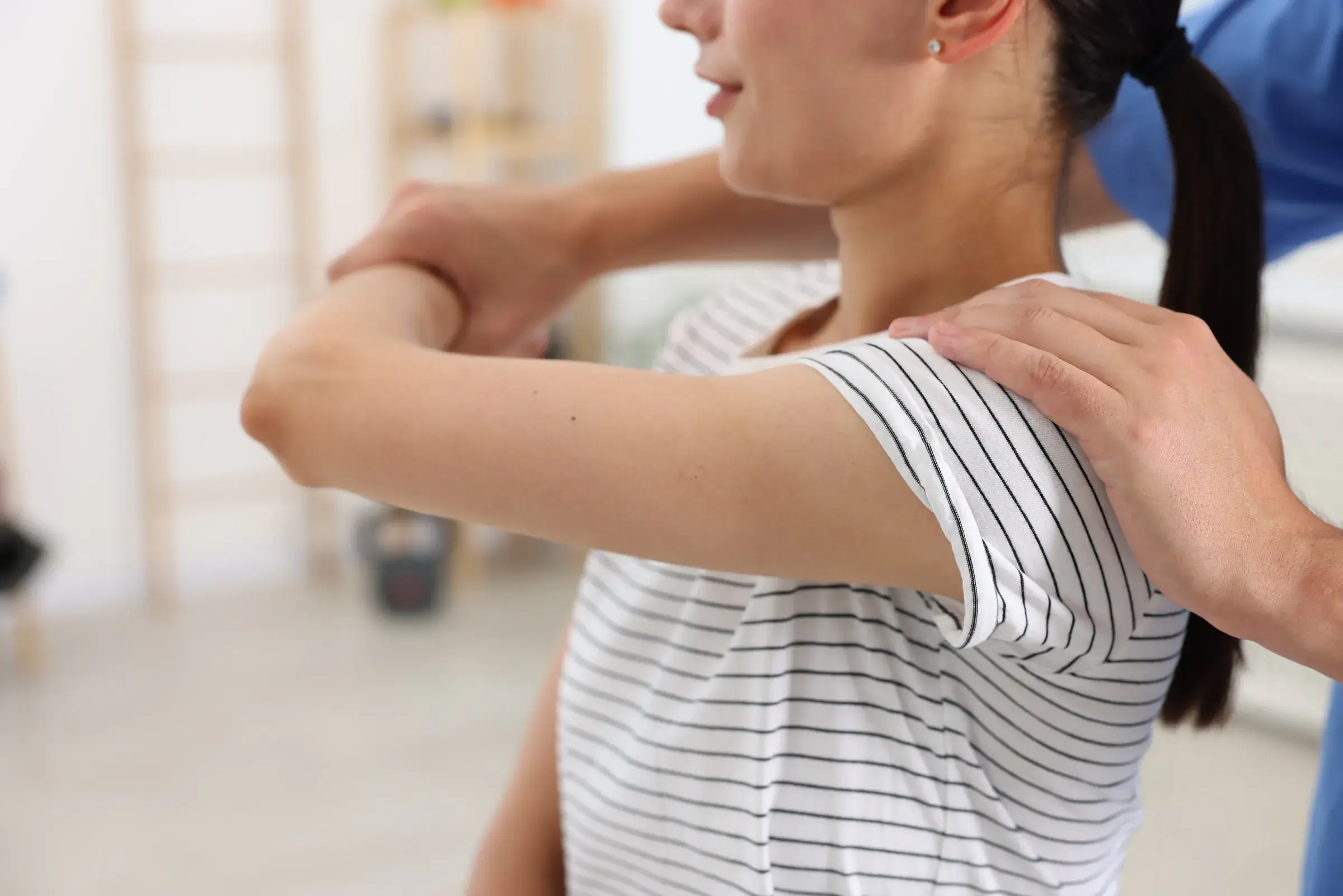
He checks whether the pain is truly from the tendon, or whether a nerve in the neck or forearm is adding to it. He tests grip strength, wrist and elbow movement, shoulder rotation and the joints of the upper back and neck. He also asks how you grip your racquet, your mouse or your tools. P-DTR, a functional neurology method that tests how the nervous system responds to specific areas, can show muscles that test “off” and leave the forearm doing extra work.
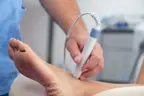
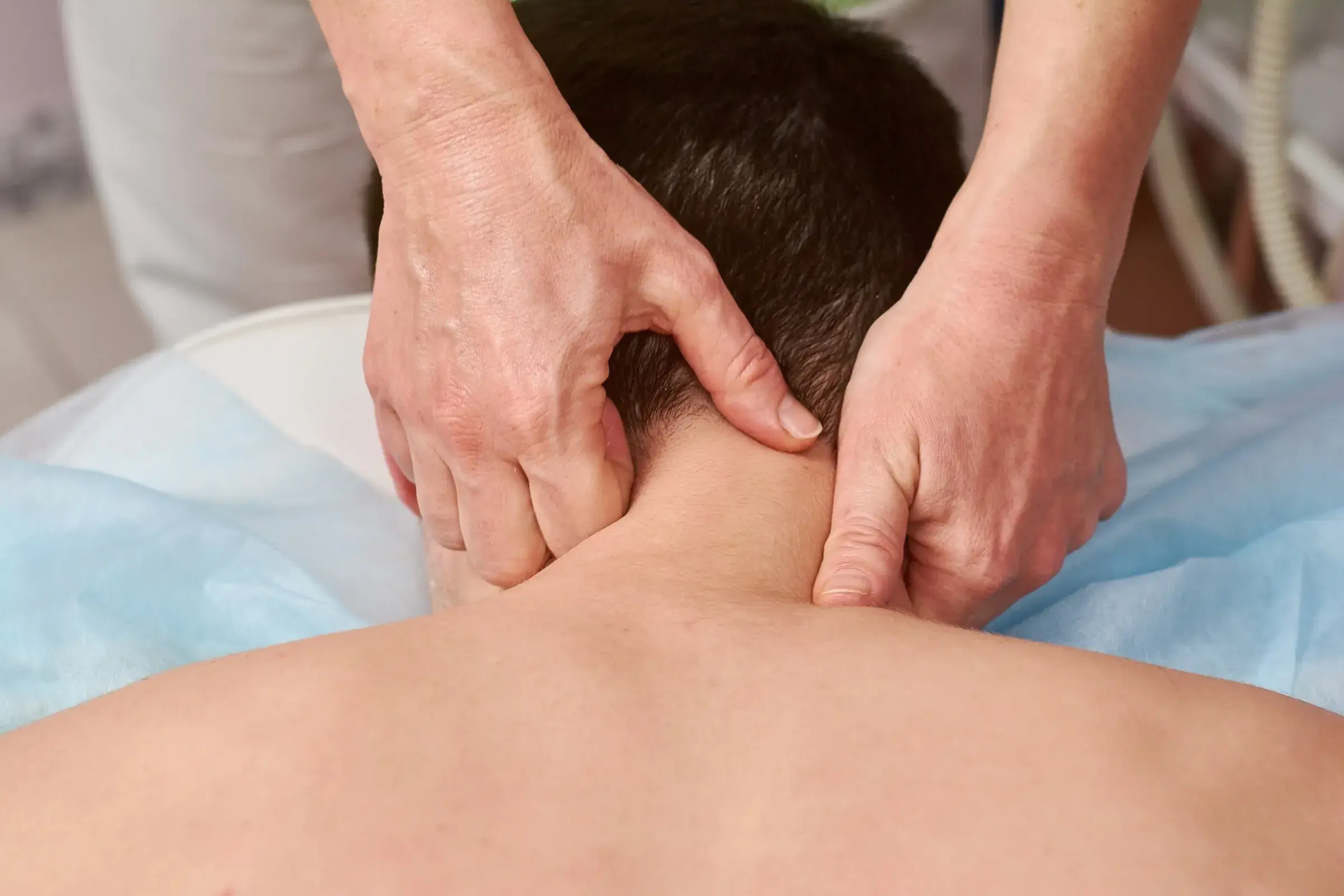
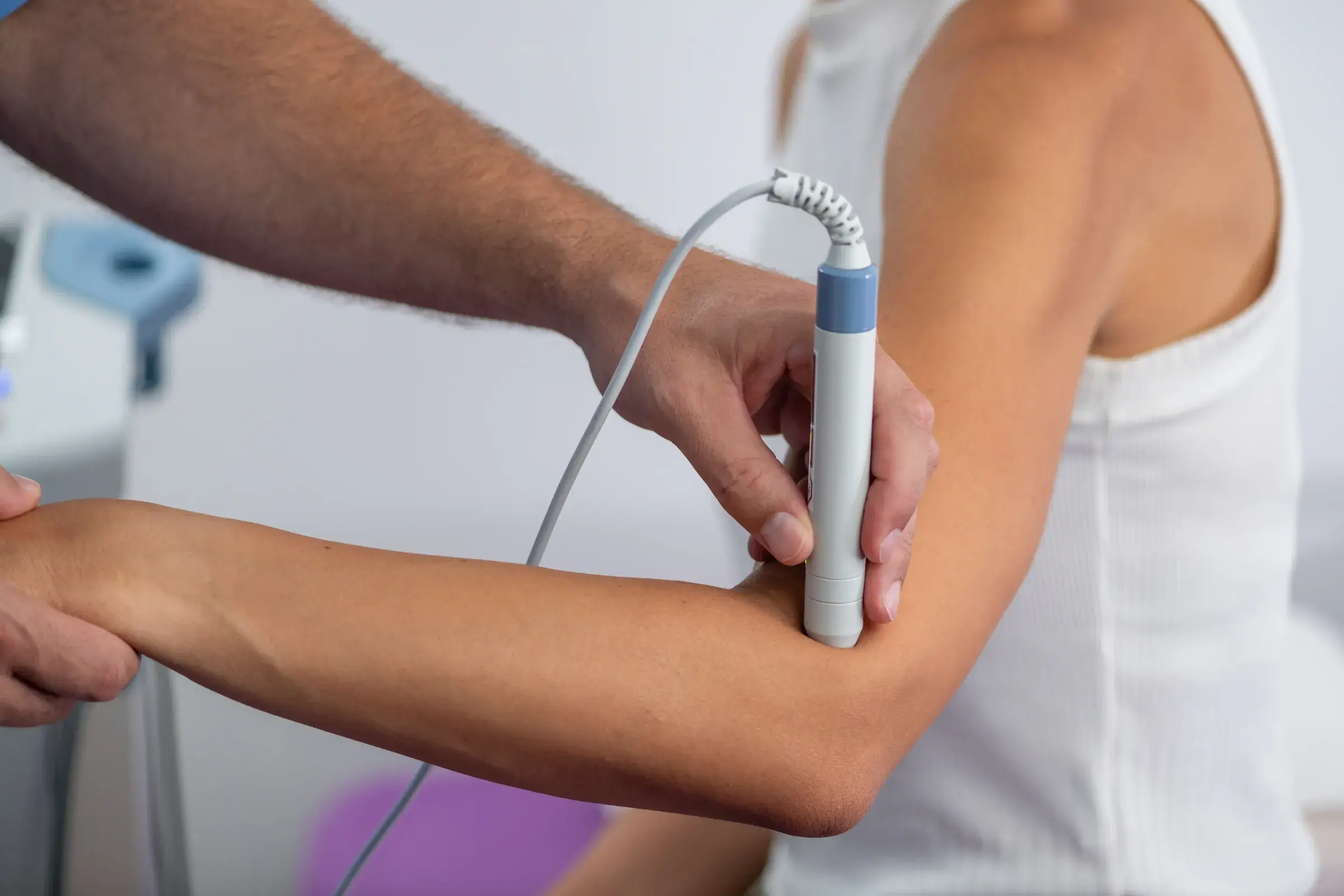
Care often combines extremity adjustments for the elbow and wrist, chiropractic care for the neck and upper back, soft-tissue work, and a gradual tendon-loading plan. For tennis elbow that has lasted several months, Dr. Tako may add EPAT shockwave using the Storz CuraMedix system, with focused and radial applicators.
Tennis elbow in racquet players, lifters and desk workers
For tennis and pickleball players, technique, grip size and string tension can all play a part. A coach may help alongside care. For lifters and climbers, it often follows a training block heavy on pulling and grip. For the many Sunnyvale desk workers who type all day, workstation setup and short breaks matter as much as treatment.
Dr. Tako is a Certified Chiropractic Sports Practitioner with a competitive sports background. He’ll help you decide what to keep doing, what to modify and how to build back up.
When to seek urgent care instead
See a medical doctor or urgent care first for elbow pain after a fall with swelling, deformity or inability to straighten the arm, which may mean a fracture or dislocation. Also get checked for a hot, red, swollen elbow, especially with fever. Numbness or tingling into the hand, or weakness in the fingers, needs an evaluation to rule out a nerve problem in the neck or arm.
This page is for education and isn't a substitute for a medical diagnosis. Individual results vary.