
 Medically reviewed by Dr. Meir Tako, DC, CCSP · Updated
Postpartum chiropractic care addresses the back, neck, pelvic and tailbone pain that often follows pregnancy, birth and newborn care. Dr. Tako uses gentle adjustments and P-DTR to restore balance after a vaginal or cesarean birth. Most patients start with an evaluation once their OB or midwife has cleared them after delivery.
What is postpartum chiropractic care?
Postpartum chiropractic care helps your body recover from the physical demands of pregnancy, birth and the first months with a newborn. During pregnancy, hormones loosen the ligaments of the pelvis and your posture shifts to carry the baby. After birth, those changes don’t reverse overnight. Your ligaments can stay looser for months, especially while breastfeeding.
At the same time, newborn care adds new strain: hours of looking down while feeding, lifting a car seat, rocking and carrying on one hip. Even women who never had back pain before can develop what many call “mommy neck” or “mommy back.”
Whether your birth was vaginal or cesarean, your pelvis and core have to find their balance again. Dr. Tako’s care focuses on that, using gentle methods that work around healing tissue and your body’s schedule.
Common symptoms
- Neck, shoulder and upper-back pain from feeding and carrying
- Low back pain, especially when lifting your baby or the car seat
- Pain at the front or back of the pelvis when walking, climbing stairs or turning in bed
- Tailbone pain when sitting, particularly after a long or assisted delivery
- Wrist and thumb pain from lifting your baby
- A weak or disconnected feeling in your core
- Pain or leaking when you try to run, jump or lift
If your symptoms are mainly leaking, pelvic pain or painful intercourse, see our pelvic floor page as well.
What causes it?
Common causes of postpartum pain include:
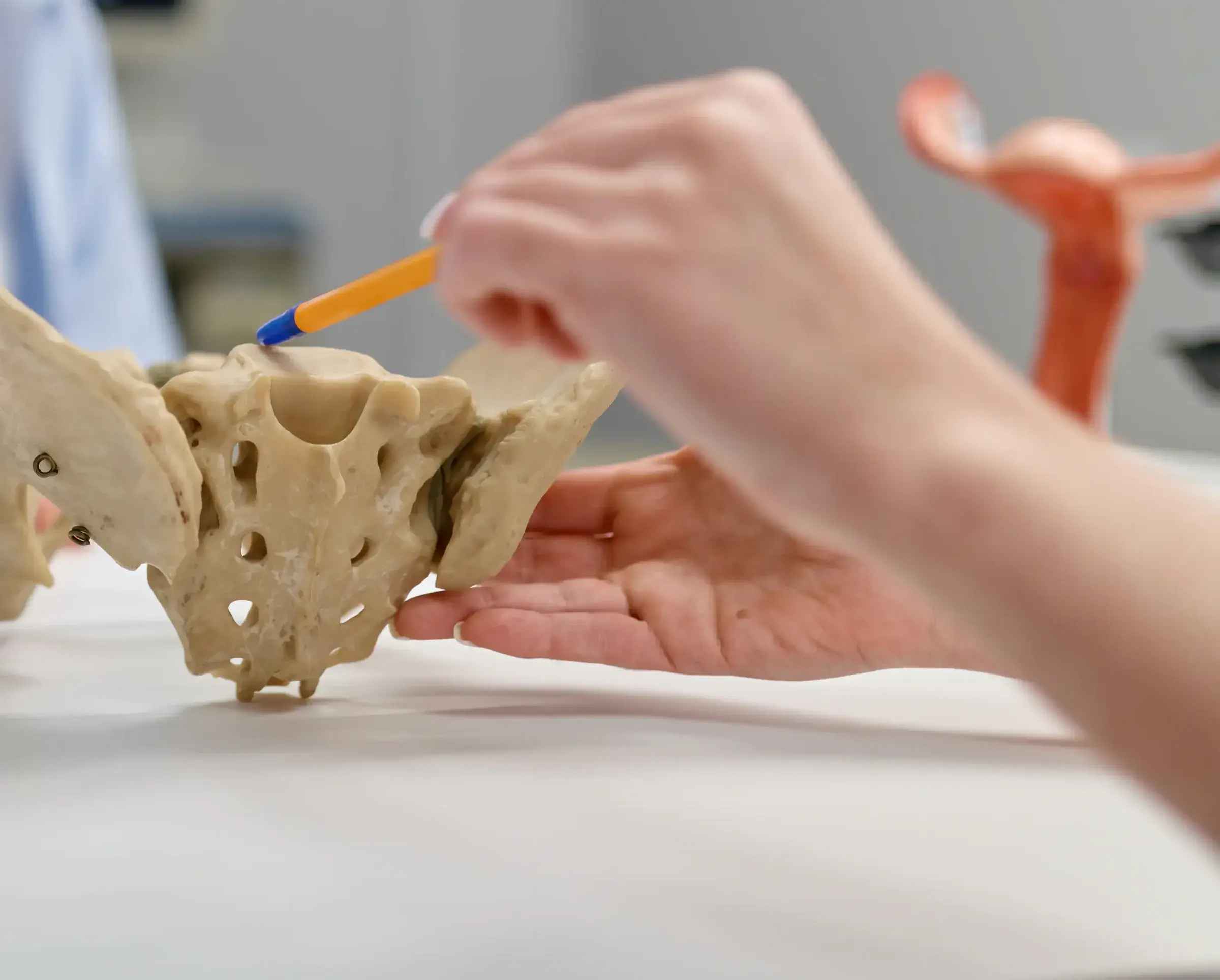
- Pelvic changes from birth. A vaginal delivery can stretch the pelvic joints and ligaments; a cesarean affects the abdominal wall and how the core supports your back.
- Loose ligaments. Hormones that soften ligaments in pregnancy can stay elevated for months, so joints are easier to strain.
- Feeding and carrying postures. Rounded shoulders and a forward head during feeds load the neck and mid-back for hours each day.
- Tailbone strain. Pressure on the tailbone during delivery can leave it sore and sensitive to sitting.
- Scar tissue. Cesarean, episiotomy and tear scars can change how nearby muscles move and fire.
- Old injuries and compensations. A pre-pregnancy back problem or an old ankle sprain can resurface when your body is already working hard to adapt.
How Dr. Tako finds the source
Postpartum pain often shows up far from where it started. Neck pain from feeding, for example, may persist because a stiff mid-back and ribs force the neck to do all the work. Knee pain when you start running again may trace back to a pelvis that hasn’t rebalanced since birth.
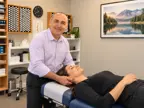
Dr. Tako’s evaluation covers your birth history, old injuries, posture, joint movement and muscle strength testing. He uses P-DTR, a functional neurology method that combines gentle muscle resistance tests with stimulation of sensory receptors to find and reset nerve-receptor imbalances in muscles, ligaments and soft tissue. It’s non-invasive and painless. Gentle adjustments are added where needed, with positioning that avoids pressure on your abdomen or incision.
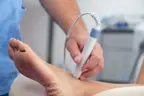
For slow-healing soft tissue, shockwave therapy may be an option. It uses acoustic pressure waves to support tissue healing, and Dr. Tako only considers it once your provider has cleared you after birth.
Some patients ask about nutrition support. Through Nutrition Response Testing, Dr. Tako can suggest a breastfeeding-safe, whole-food supplement plan to support your diet during recovery. It’s supportive, not a treatment for any condition. If you notice changes in your mood, talk to your OB or doctor.
The evaluation answers three questions: where your pain is coming from, what changed to cause it, and what your body needs to recover fully.
Getting back to exercise and running
Many new mothers want to get back to running, lifting or classes, and the timeline is different for everyone. Healing after a cesarean usually takes longer, and a significant tear or a long labor can also affect how quickly you can load your pelvis.
Dr. Tako looks at how your pelvis, hips and core work together under load, not just on the table. He’ll help you decide what to start with, what to pause, and how to build back gradually. Leaking, a feeling of heaviness in the pelvis, or pain during or after exercise are signs your body needs more time or a different approach.
Where it helps, Dr. Tako recommends working alongside a pelvic floor physical therapist, who can assess the pelvic floor muscles directly. Many patients do well combining both: Dr. Tako for pelvic balance and the nervous system, and a physical therapist for targeted pelvic floor training.
When to seek urgent care instead
Call your OB or 911 for heavy bleeding (soaking a pad in an hour or less), fever, chest pain or shortness of breath, a severe headache or vision changes, or pain, swelling and warmth in one calf. Redness, discharge or opening of a cesarean incision needs prompt medical care. If you have thoughts of harming yourself or your baby, call or text 988, or call 911. Talk to your OB or doctor about any postpartum mood changes.
This page is for education and isn't a substitute for a medical diagnosis. Individual results vary.