 Medically reviewed by Dr. Meir Tako, DC, CCSP · Updated
Hip pain can come from the hip joint, the tendons and bursa on the outside of the hip, the hip flexors at the front, or the sacroiliac (SI) joint and lower back. Chiropractic care can help when the cause is mechanical. The first step is an evaluation to find where the pain is really coming from.
What is hip pain?
“Hip pain” covers a lot of ground. People point to the groin, the outside of the thigh, the buttock or the low back and call it the hip. Each area points to different structures, and that’s the first clue to what’s going on.
Pain in the groin or deep at the front usually involves the hip joint itself or the hip flexors. Pain on the outside, especially lying on that side, is often the gluteal tendons and the bursa over the bony point of the hip. Pain in the buttock or near the dimples of the lower back often comes from the SI joint or the lumbar spine. The hip also sits between your lower back and your knee, so problems above and below it can show up there.
Common symptoms
- Deep ache or pinching in the groin, especially when you sit low, squat or bring your knee to your chest
- Pain on the outside of the hip that’s worse lying on that side, climbing stairs or standing on one leg
- Tight, sore hip flexors after sitting all day or after running
- Pain in the buttock or near the base of the spine, sometimes on one side only
- Stiffness getting up from a chair or out of the car
- Clicking or catching in the front of the hip
- A limp or shortened stride late in a run
What causes it?
The most common causes of hip pain include:
- Overloaded hip flexors. Long hours sitting keep the hip flexors short, then running, kicking or sprinting asks them to work hard at full length.
- Outer-hip tendon pain and bursitis. The gluteal tendons on the outside of the hip get compressed and overloaded, often with weak hip muscles or one-legged habits.
- SI joint problems. The sacroiliac joints connect the spine to the pelvis. When one moves too little or too much, pain often shows up in the buttock and hip.
- Joint wear and impingement. Age-related changes or a bony shape that pinches at the front of the hip can cause groin pain in deep positions.
- Old injuries and compensations. An old ankle sprain, a knee problem or a back injury can change how you walk and load each leg. Over time, the hip on one side does more than its share.
How Dr. Tako finds the source
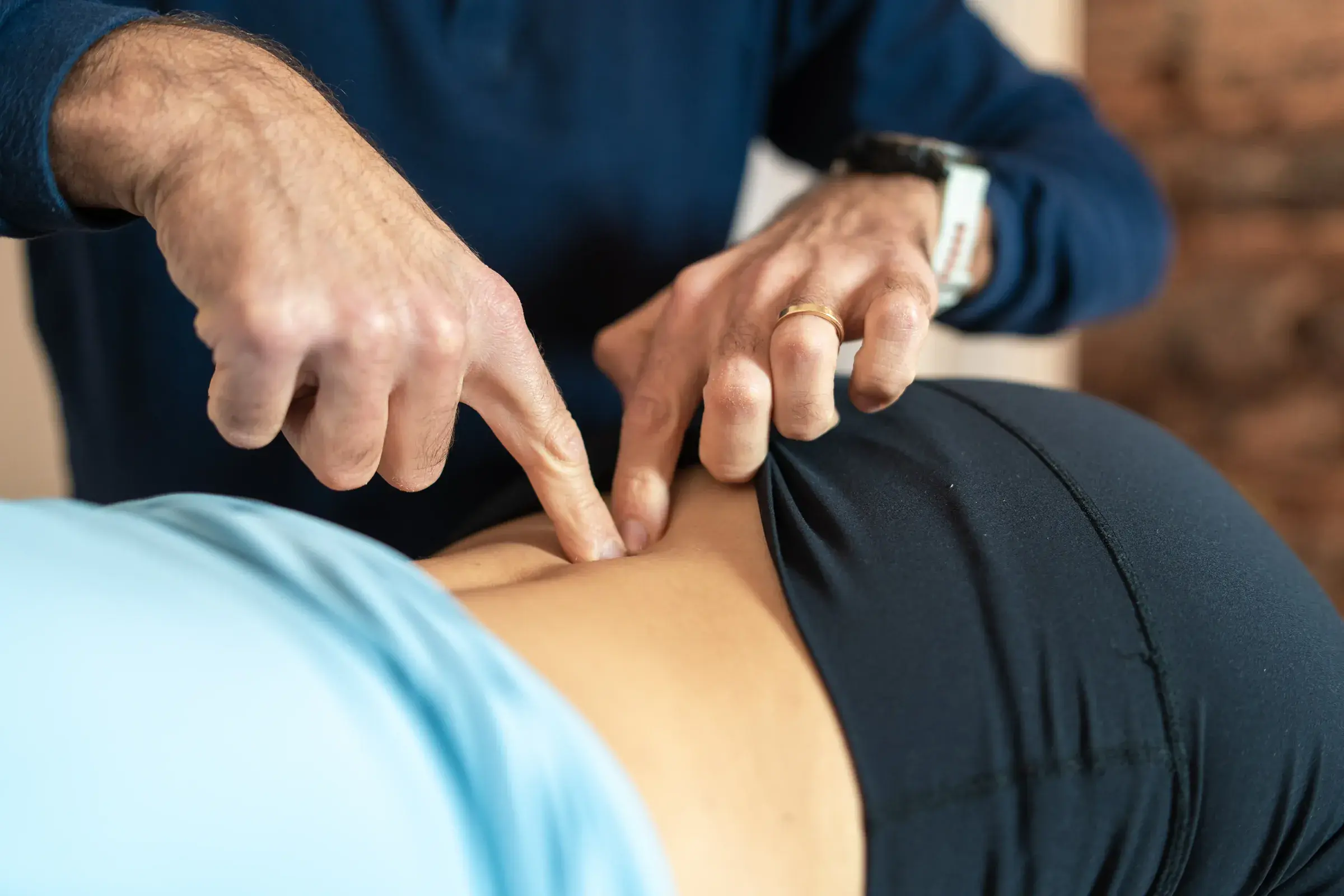
Where it hurts is only the starting point. Dr. Tako’s evaluation looks at how your lower back, pelvis, hips, knees and feet work together, not only at the spot that hurts.
A common example: a runner with outer-hip pain on the right whose left foot has been flat since an old ankle sprain. The pelvis drops slightly on every stride, and the right hip muscles strain to hold it level. Treating the sore hip alone gives short relief; restoring how the foot and pelvis work keeps it calm.
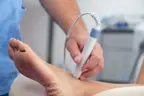
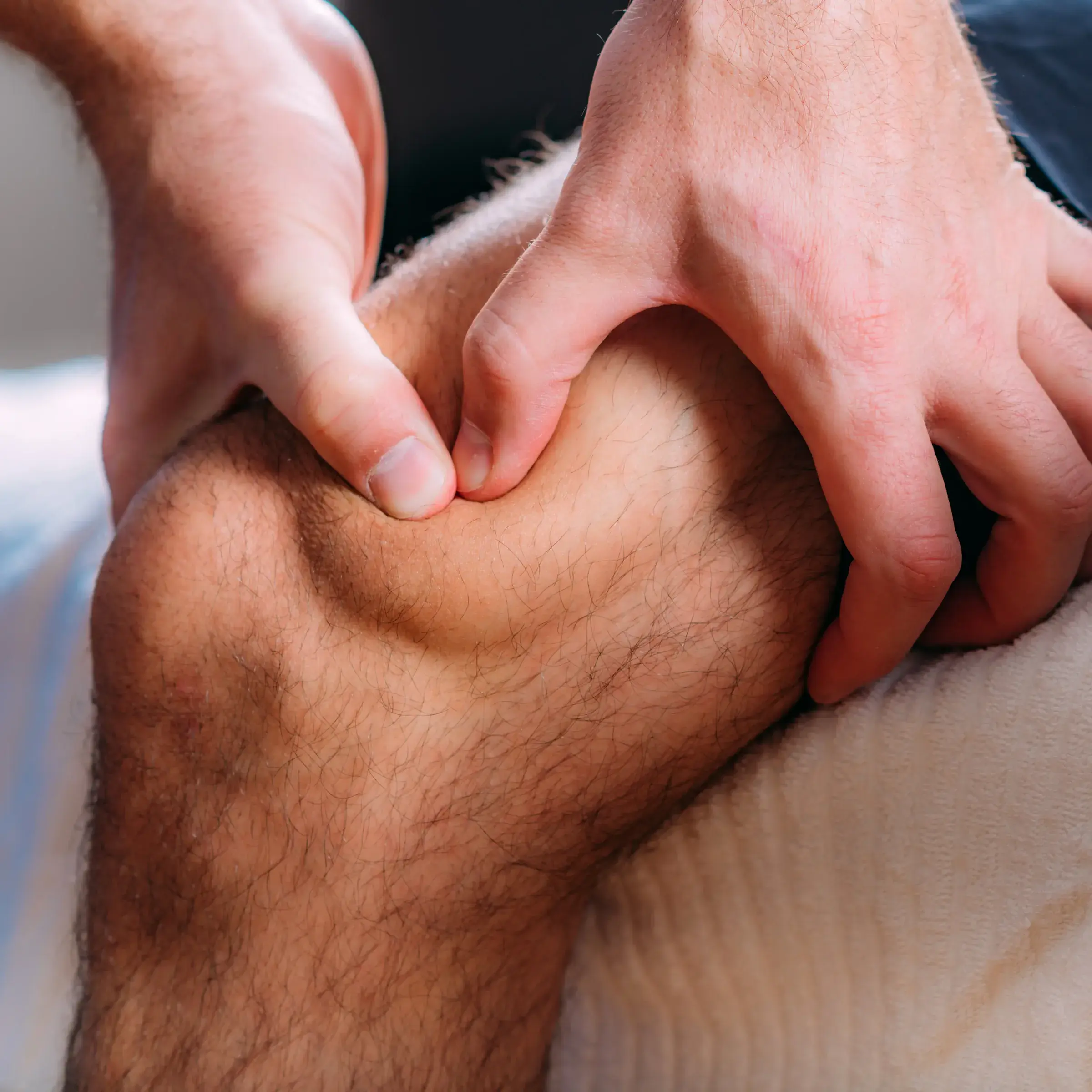
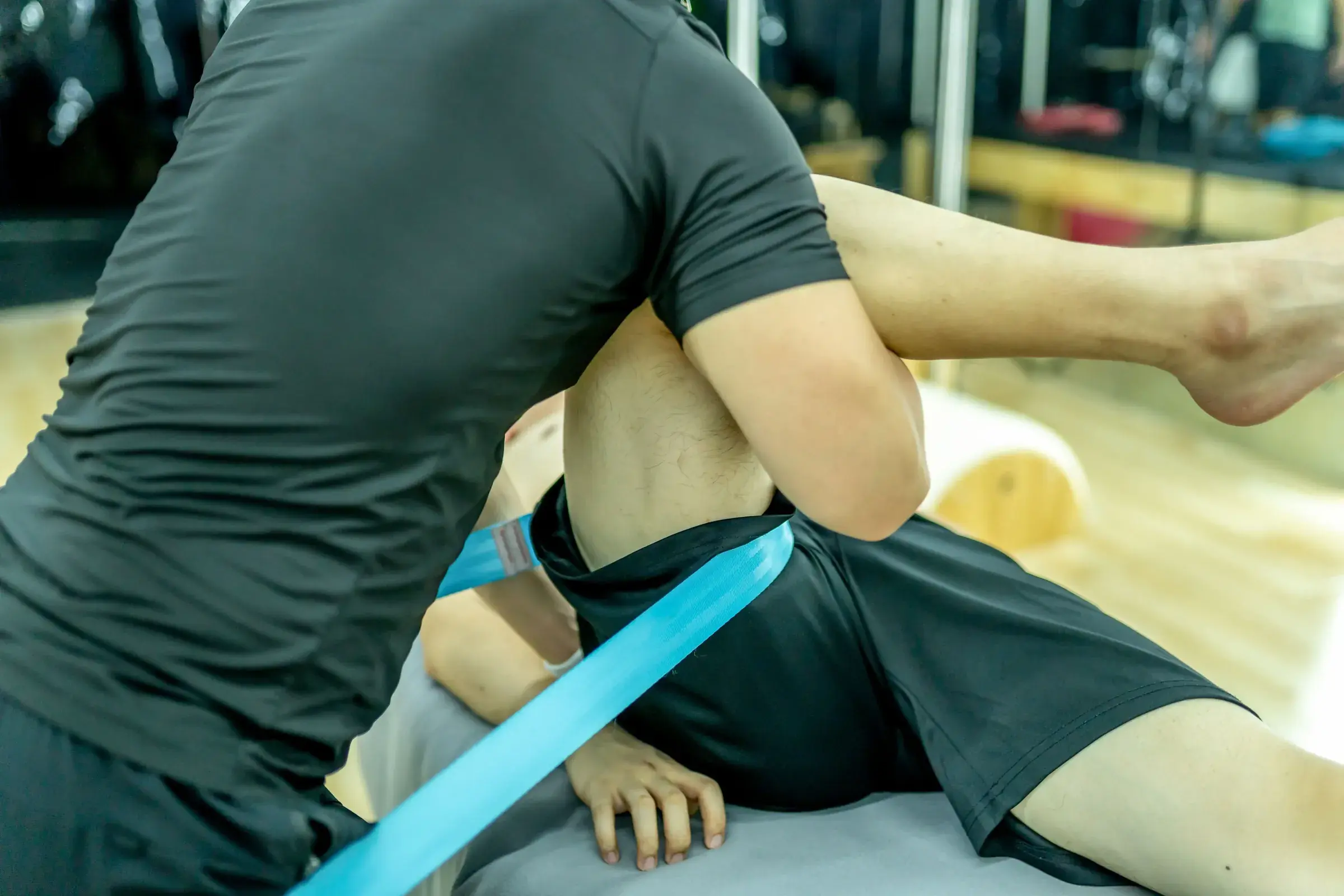
The evaluation typically includes your history (including old injuries), how you walk, squat and balance on one leg, joint testing and muscle strength testing. Dr. Tako also uses P-DTR, a functional neurology method that tests how the nervous system responds to specific areas. It can reveal protective patterns, such as hip stabilizers that switch “off” after an injury, that keep other muscles overworked and tight. For stubborn outer-hip tendon pain, EPAT shockwave may also be part of the plan.
The goal is a clear answer to three questions: what is causing the hip pain, why it started, and what will keep it from coming back.
Hip pain in runners, martial artists and active people
For runners, hip pain usually tracks with training load and stride: more mileage, more hills, or a side that’s working harder than the other. Dr. Tako has a background in competitive running himself and looks at how you actually run.
Martial artists put the hip through a different kind of stress. High kicks, deep stances, guard work and takedowns demand range at the end of hip motion, often under force. Years of training can leave the hip strong in some positions and pinched or guarded in others. With his own background in full-contact martial arts, Dr. Tako knows what those positions ask of the hip.
Part of the plan is a safe return to training: what to keep doing, what to pause, and how to build back without the pain returning. Many active patients are able to keep some form of training during care.
When to seek urgent care instead
Go to the emergency room if you can't bear weight after a fall, especially if you're older or have osteoporosis, or if the leg looks shorter or turned outward. See a medical doctor first for a hot, swollen hip with fever, deep groin pain with no clear cause, night pain that doesn't change with position, or hip pain with unexplained weight loss or a history of cancer.
This page is for education and isn't a substitute for a medical diagnosis. Individual results vary.