 Medically reviewed by Dr. Meir Tako, DC, CCSP · Updated
TMJ disorders (TMD) cause pain, clicking or limited movement in the jaw joint and the muscles that move it. Chiropractic care can help when the problem involves muscle tension, joint mechanics or neck posture. The first step is an evaluation of your jaw, neck and bite habits, coordinated with your dentist when needed.
What is TMJ?
TMJ stands for the temporomandibular joint, the joint just in front of each ear that connects your jaw to your skull. You use it every time you talk, chew, swallow or yawn. When people say they “have TMJ,” they usually mean a temporomandibular disorder (TMD): pain or dysfunction in that joint or the muscles that move it.
The jaw is unusual because the two joints, one on each side, have to move together perfectly. If one side is stiff, one muscle is overworking, or the neck holds the head at an angle, the whole system can start to strain.
TMD is common, and most cases are muscular or mechanical rather than a sign of joint damage. That’s why careful care often helps.
Common symptoms
- Pain or aching in the jaw, in front of the ear or at the temples
- Clicking, popping or grinding sounds when you open or close your mouth
- A jaw that feels tight, tired or sore after chewing or talking
- Difficulty opening your mouth fully, or a jaw that catches or locks briefly
- Headaches, earaches or a feeling of fullness in the ear without an ear infection
- Neck and shoulder tension, often on the same side as the jaw pain
- Waking with a sore jaw or teeth, which can be a sign of night clenching
What causes it?
Common causes and contributors to TMJ problems include:
- Clenching and grinding. Many people clench during the day when concentrating or stressed, and grind at night. The jaw muscles are strong, and constant clenching overloads the joint.
- Muscle imbalance. When one side of the jaw works harder than the other, from chewing habits, dental work or an old injury, the joint can start to move unevenly.
- Neck and head posture. A forward head position changes how the jaw rests and how its muscles work. The upper neck and jaw are closely linked.
- Joint mechanics. The small disc inside the jaw joint can shift, causing clicking or catching.
- Old injuries and compensations. A blow to the face, a whiplash injury, long dental procedures or orthodontic work years ago can change how the jaw moves. The body adapts, but the adaptation can become a source of pain later.
How Dr. Tako finds the source
Jaw pain is rarely only about the jaw. Dr. Tako’s evaluation looks at how your jaw, neck, upper back and nervous system work together.
Consider a common example. A patient has left-sided jaw pain and clicking that started a year ago. The jaw muscles on the left are tender. But the exam also shows the upper neck is stiff turning left, a leftover from a minor car accident a few years earlier. The neck holds the head slightly tilted, and the jaw works unevenly every time the patient chews. Treating the jaw alone helps for a while. Treating the neck and jaw together is what lets the pattern change.
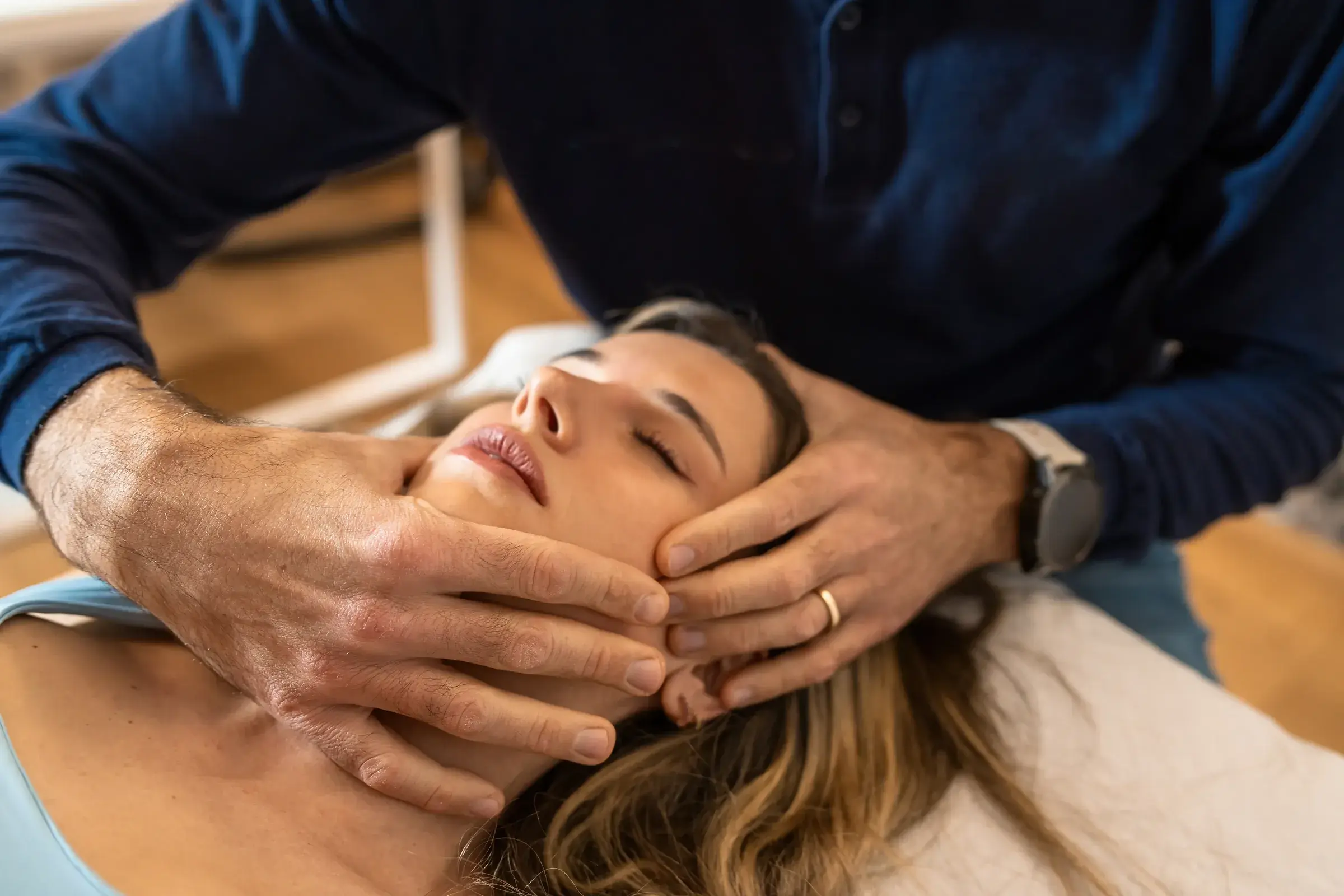
The evaluation typically includes your history (including dental work, accidents and clenching habits), how your jaw opens and closes, joint testing of the jaw and neck, and muscle strength testing. Dr. Tako also uses P-DTR, a functional neurology method that uses muscle testing and stimulation of specific sensory receptors to find protective patterns in the nervous system. The jaw has a dense supply of these receptors, and protective patterns can keep jaw muscles tight even after the original trigger has passed.
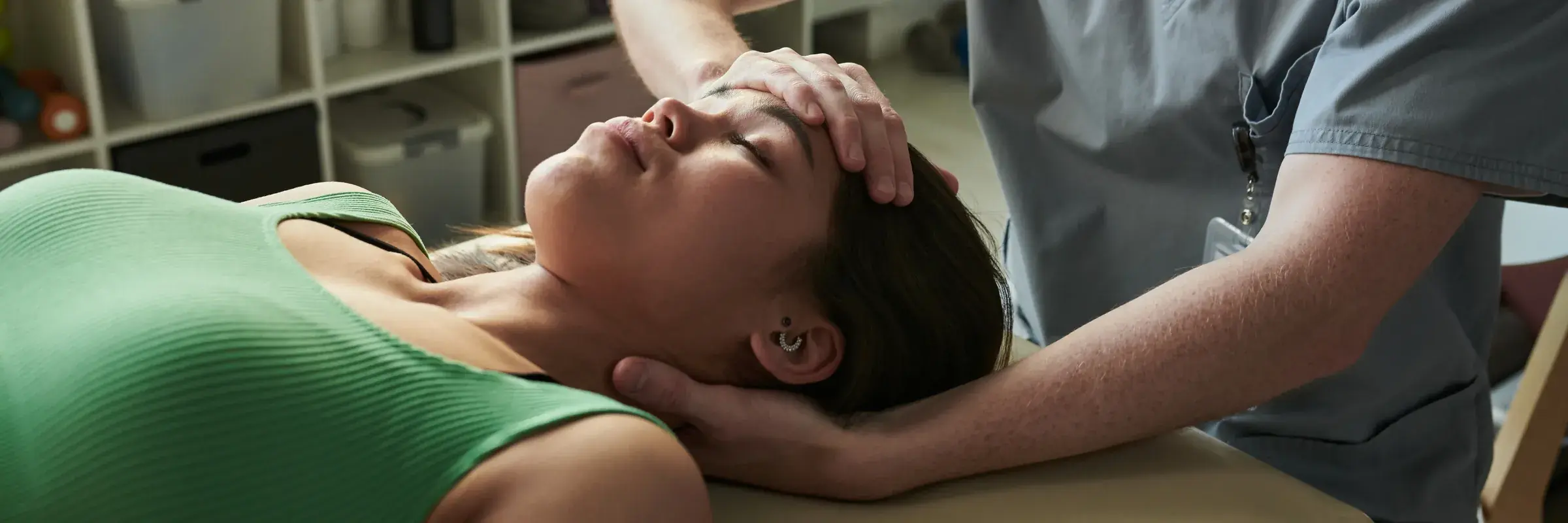
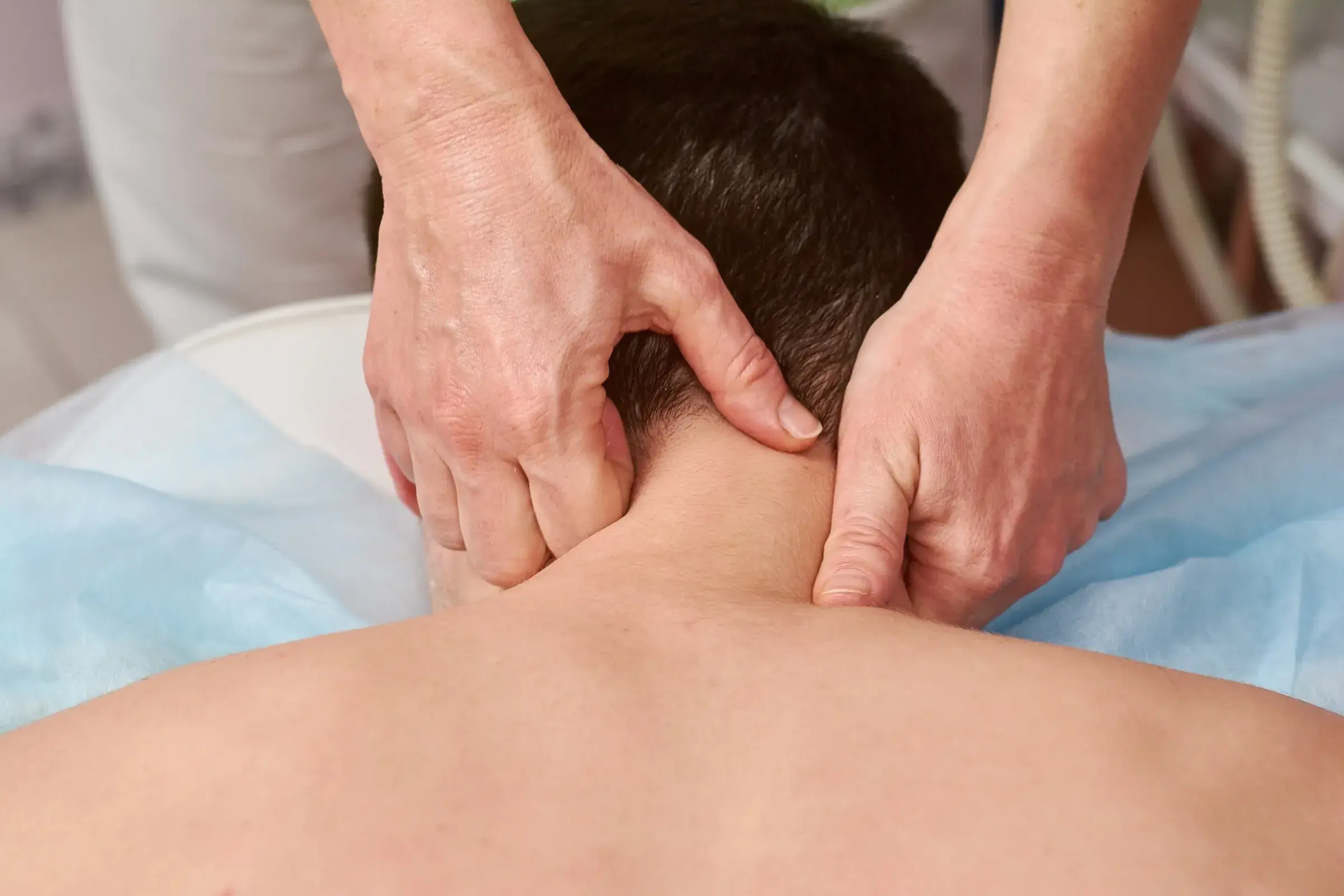
Treatment is matched to what he finds. It may include gentle extremity adjustments for the jaw joint, adjustments to the neck and upper back, and soft tissue work for the jaw and neck muscles. If a night guard, bite assessment or dental treatment would help, he’ll recommend you see your dentist.
The goal is a clear answer to three questions: what is causing your jaw pain, why it started, and what will keep it from coming back.
Jaw pain, stress and clenching
For many people, TMJ problems flare during stressful periods: a product launch, exams, a new baby, a hard training block. Clenching is often an unconscious response to concentration and pressure, and many people don’t realize they do it until their jaw, teeth or temples start to hurt.
Athletes are a common group too. Clenching during heavy lifts, sprints or contact sports is natural, but it adds up, and a past blow to the face in sport can leave the jaw moving unevenly.
Part of your plan covers simple habits that take load off the jaw: noticing when you clench and resting your tongue on the roof of your mouth with your teeth slightly apart, choosing softer foods during a flare, and avoiding gum. Combined with treatment of the jaw and neck, these changes often help the jaw settle.
When to seek urgent care instead
Get urgent care if your jaw locks open or closed and you can't move it, or after a blow to the face or jaw, which can cause a fracture or dislocation. Jaw pain that comes with chest pain, shortness of breath, sweating or pain in the left arm can be a sign of a heart attack. Call 911. See a medical doctor or dentist first for swelling, fever, a dental infection, numbness in the face, a lump in the jaw or neck, or unexplained weight loss.
This page is for education and isn't a substitute for a medical diagnosis. Individual results vary.