 Medically reviewed by Dr. Meir Tako, DC, CCSP · Updated
Scoliosis is a sideways curve of the spine, often with some rotation. Chiropractic care cannot straighten or reverse a structural curve. It may help with the back pain, stiffness and muscle imbalance that often come with scoliosis. Children and teens with a growing curve need regular monitoring by a physician or orthopedist, who makes any bracing decisions.
What is scoliosis?
Seen from behind, a typical spine runs fairly straight up the middle of the back. With scoliosis, it curves to the side, often in an S or C shape. The vertebrae usually rotate a little too, which can make one shoulder blade or one side of the ribs stick out more.
Most scoliosis is idiopathic, meaning there’s no known cause. It often appears around the early teen years. Other types develop in adults as the discs and joints of the spine wear unevenly. This is called degenerative or adult-onset scoliosis.
It helps to separate two ideas. A structural curve is a fixed change in the shape of the spine. A functional curve comes from something else, such as a leg length difference or muscle spasm, and can change when that cause is addressed. Chiropractic care doesn’t change a structural curve, but it may help how you move and feel with one.
Common symptoms
- One shoulder or hip sitting higher than the other
- A rib or shoulder blade that sticks out more on one side, especially when bending forward
- Clothes hanging unevenly, or a waist crease deeper on one side
- Back pain, aching or fatigue after standing or sitting for long periods
- Stiffness when twisting or bending to one side
- In adults, low back pain that may spread into the hips or legs
Many young people with scoliosis have no pain at all. The curve is often first noticed at a school screening or a routine physical.
What causes it?
Scoliosis can come from several sources:
- Idiopathic. The most common type, with no single known cause. It tends to run in families.
- Degenerative. Uneven wear of the discs and joints in adults can create a new curve or let an old one progress.
- Congenital. A difference in how the vertebrae formed before birth.
- Neuromuscular. Linked to conditions that affect the nerves and muscles, such as cerebral palsy.
- Functional. A leg length difference, muscle spasm or a painful joint can make the spine lean without a structural change.
Poor posture, carrying a heavy backpack or sleeping position do not cause structural scoliosis.
How Dr. Tako finds the source
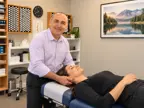
When someone with scoliosis comes in with back pain, the curve isn’t always the whole story. Dr. Tako looks for what’s driving the pain right now. That might be a stiff segment, an irritated joint, tight muscles on one side, or hips and feet that aren’t sharing the load evenly.
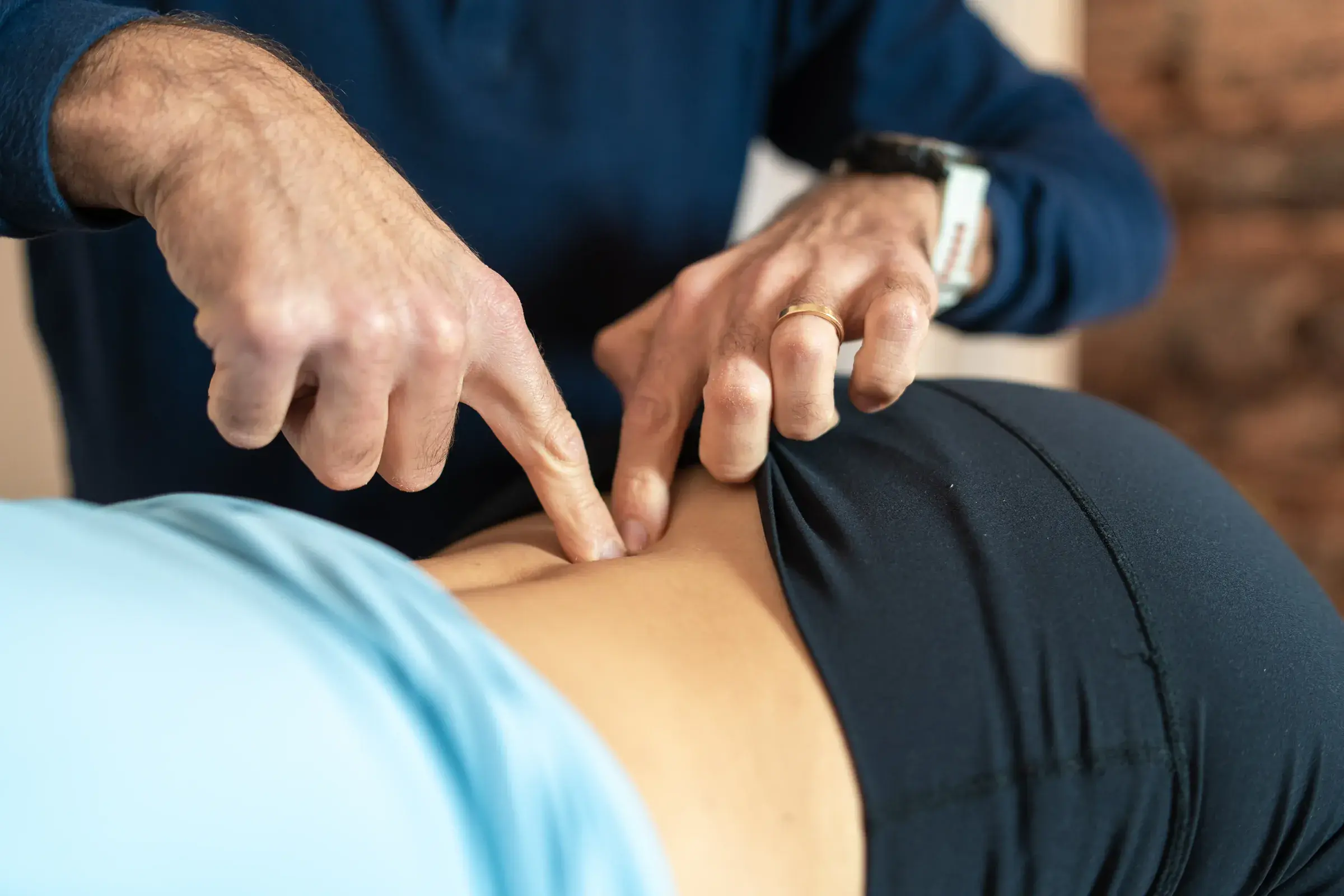
The evaluation typically includes your history, posture and spinal movement, joint testing, muscle strength testing and a neurological screen. Dr. Tako reviews any X-rays or curve measurements you already have. He also uses P-DTR, a functional neurology method that tests how the nervous system responds to specific areas, to find protective patterns that keep muscles guarding.
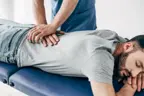
Care is chosen for your spine and comfort. It may include gentle Activator or drop-table adjustments, Gonstead adjustments where appropriate, flexion-distraction for the low back, and work on the hips and ribs. The aim is less pain, easier movement and better function in daily life.
Scoliosis in teens, adults and active people
For teens who are still growing, the priority is regular monitoring by a physician or orthopedist. Dr. Tako can help with pain or stiffness during that time, but he won’t replace that monitoring.
For adults, scoliosis pain often builds with long workdays, desk sitting or a change in activity. Many people in Sunnyvale’s tech jobs notice it most after hours at a screen. For athletes and active people, the focus is moving well in your sport and building strength and mobility that support your back.
When to seek urgent care instead
See a physician or orthopedist promptly if a curve seems to be getting worse quickly, especially in a child or teen who is still growing. A child with scoliosis and back pain that wakes them at night needs a medical evaluation. Get urgent medical care for numbness, tingling or weakness in the legs, changes in walking or balance, or any loss of bladder or bowel control.
This page is for education and isn't a substitute for a medical diagnosis. Individual results vary.