 Medically reviewed by Dr. Meir Tako, DC, CCSP · Updated
The pelvic floor is the group of muscles that supports your bladder, bowel and uterus. When it's weak, tight or poorly coordinated, it can cause leaking, pelvic pain or painful intercourse. Dr. Tako combines EPAT acoustic wave therapy with P-DTR. Care starts with an evaluation, and many patients also work with a pelvic floor physical therapist.
What is the pelvic floor?
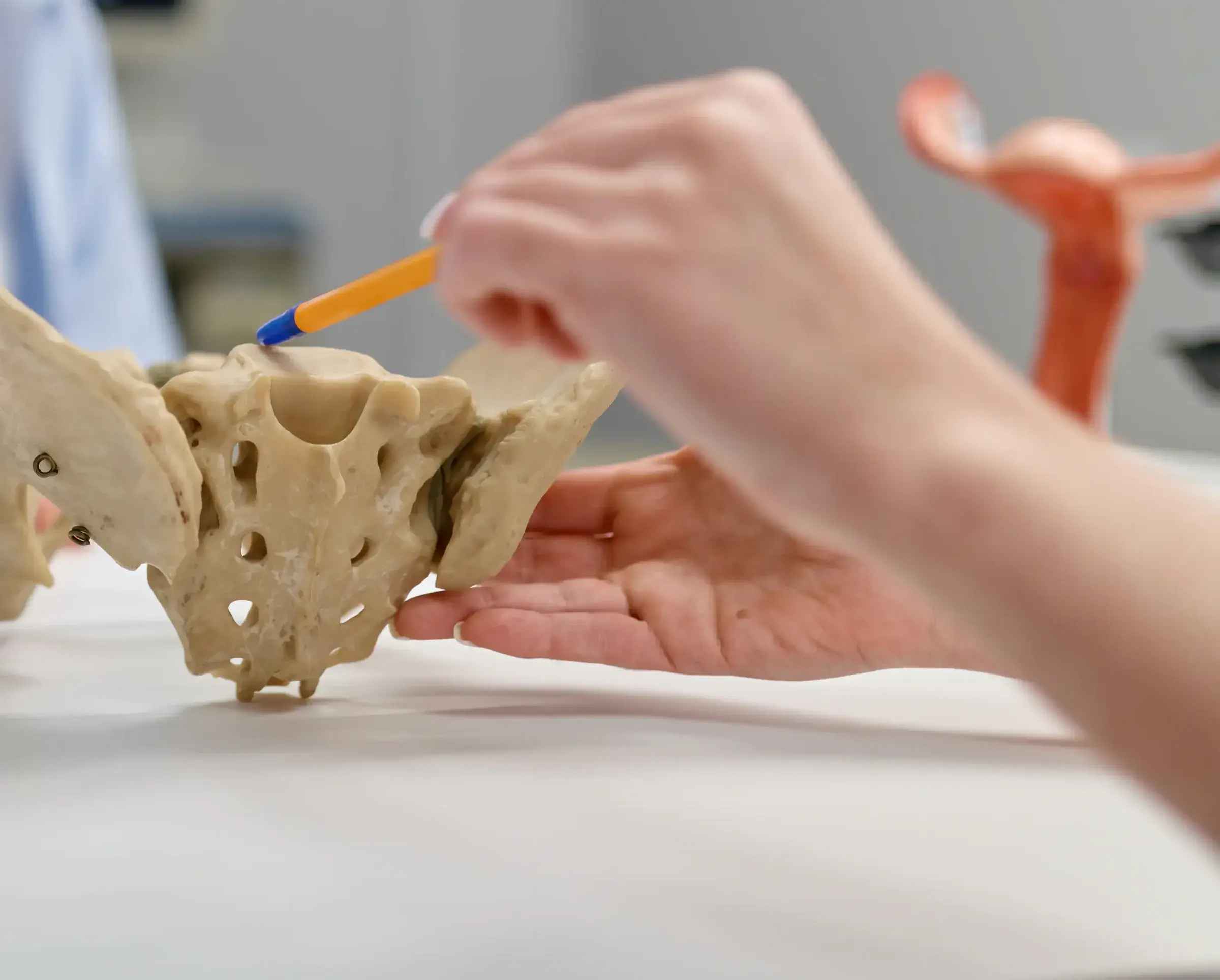
Your pelvic floor is a hammock of muscles, ligaments and connective tissue at the base of your pelvis. It supports your bladder, bowel and uterus, helps control when you pee and pass stool, stabilizes your pelvis and lower back, and plays a role in sexual function.
Like any muscle group, it can be too weak, too tight, or poorly coordinated. All three can cause problems. A weak pelvic floor may leak when you cough. An overly tight one may cause pain with intercourse or a constant ache. Often it’s a mix: some muscles switched “off,” others working overtime to compensate.
Pelvic floor problems are common, especially after childbirth, but they aren’t something you simply have to live with.
Common symptoms
- Leaking urine when you cough, sneeze, laugh, jump or run
- A sudden, strong urge to pee, or needing to go often (overactive bladder)
- Constant or intermittent vaginal or pelvic pain or discomfort
- Pain during or after intercourse
- Tailbone pain, especially when sitting
- Bowel urgency or difficulty emptying
- A heaviness or bulging sensation in the vagina (possible prolapse; get a medical evaluation first)
- Lower abdominal, hip or back pain that hasn’t responded to other care
What causes it?
Common causes of pelvic floor problems include:
- Childbirth. Vaginal delivery stretches the pelvic floor, and a perineal tear or episiotomy can leave scar tissue. A cesarean birth affects the abdominal wall and how the core and pelvic floor work together.
- Scar tissue. Scars from birth, cesarean, gynecological surgery or a labiaplasty can change how nearby muscles and nerves behave.
- Trauma to the pelvis or tailbone. A fall on the tailbone or an accident can affect the pelvic floor years later.
- Pelvic imbalance. When the sacroiliac joints or pubic joint move unevenly, pelvic floor muscles on one side may tighten to stabilize the pelvis.
- Nerve-muscle imbalances. After an injury, the nervous system can keep some muscles inhibited and others guarded, even once the tissue has healed.
- Old injuries and compensations. An old ankle or hip injury can change how you load your pelvis every step, and the pelvic floor absorbs the difference.
How Dr. Tako finds the source
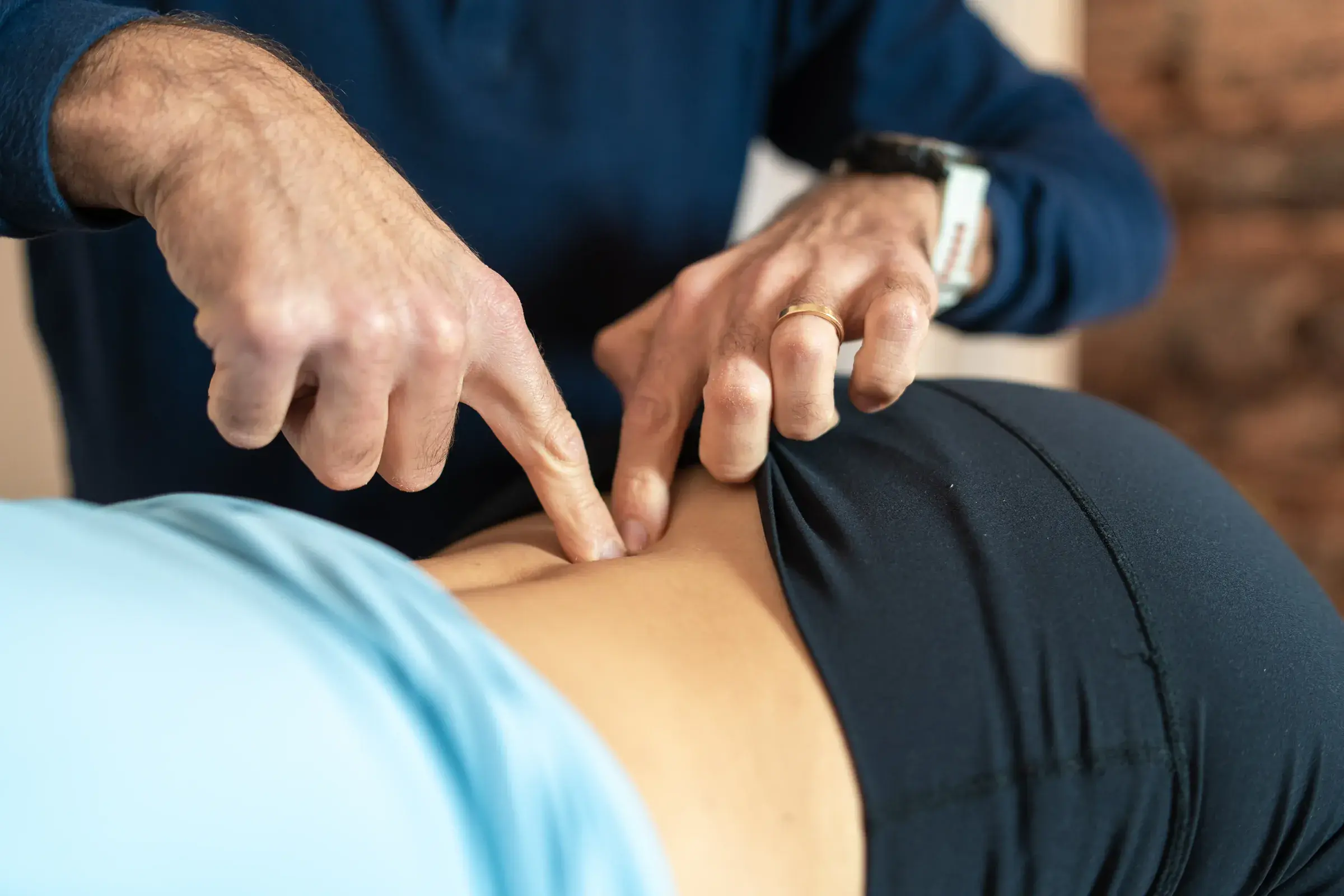
Pelvic floor symptoms rarely come from one muscle in isolation. Dr. Tako’s evaluation looks at your birth and surgical history, scars, old injuries, pelvic and spinal alignment, and how your nervous system controls the muscles around your pelvis. One patient’s shooting pain from the pubic bone to the hip, for instance, may trace back to scar tissue in the pelvic floor rather than the hip itself.
He uses P-DTR, a functional neurology method that combines gentle muscle resistance tests with stimulation of sensory receptors. It identifies and resets nerve-receptor imbalances affecting the muscles, ligaments and soft tissue of the pelvis. It’s non-invasive and painless.
Once the source is clear, treatment usually follows the practice’s protocol:
- Acoustic wave therapy (EPAT). A handheld wand delivers acoustic pressure waves over the pelvic, pubic and perineal areas. The aim is to improve circulation and support the healing of irritated or scarred tissue. Most patients feel a tapping sensation; mild discomfort is possible but uncommon.
- P-DTR. Dr. Tako follows with P-DTR to restore balance in the surrounding muscles and nerves.
Sessions typically last about 30 minutes and are scheduled weekly. Many patients need around five sessions, though your plan depends on your history and how you respond. There’s no downtime.
Gentle chiropractic adjustments to the pelvis and lower back are added where they help.
The evaluation answers three questions: what is driving your symptoms, why it started, and what other care, such as a pelvic floor physical therapist or your OB/GYN, should be part of your plan.
Pelvic floor care after childbirth and for active women
After childbirth. Many patients come in months or years after a birth, often after a tear, episiotomy or cesarean, with leaking, pain or painful intercourse they assumed was normal. Care can start once your provider has cleared you after delivery. It is not used during pregnancy.
Runners, lifters and active women. Leaking during running, jumping or heavy lifts is common, but it’s a sign that the pelvic floor isn’t keeping up with the load. Dr. Tako looks at how your hips, pelvis and core work together during your sport, and helps you plan a gradual return to full training.
When you’ve already tried pelvic floor therapy. Some patients come in after pelvic floor physical therapy helped only partly. Dr. Tako’s approach is different and often complementary. He’s glad to coordinate with your physical therapist or OB/GYN.
When to seek urgent care instead
See your doctor first for blood in your urine, unexplained vaginal bleeding, fever with pelvic pain, or burning with urination (possible infection). A bulge you can see or feel at the vaginal opening may be prolapse and needs a medical evaluation before any care. Sudden loss of bladder or bowel control with back pain or numbness in the groin or inner thighs is an emergency. Go to the emergency room right away.
"Since I had my last child, I have had lower abdominal pain and back pain that Dr Tako linked to pelvic floor dysfunction. I couldn't sleep on my side for years. After my first session, I started feeling better very quickly and felt a lightness in my pelvic floor. I had seen many doctors before and no one could identify the actual issues."
— N., Fremont, CA
This page is for education and isn't a substitute for a medical diagnosis. Individual results vary.