 By Dr. Meir Tako, DC, CCSP · Updated · 6 min read
- Shockwave prices vary widely. The total for a full course matters more than the price of one session.
- Insurance often doesn't cover shockwave, but HSA and FSA funds can often be used. Check with your insurer and plan administrator.
- It's most worth it for chronic tendon or heel pain that hasn't improved with good conservative care, and least worth it for brand-new pain.
- The main downsides are cost, patience while the tissue repairs, and the fact that it doesn't work for everyone.
Shockwave therapy cost varies widely and depends on per-session or package pricing, the type of device, the condition and how many sessions you need, usually 3 to 5. Insurance often doesn't cover it, but HSA or FSA funds often can. It's most worth it for chronic tendon or heel pain that hasn't improved with other conservative care.
How much does shockwave therapy cost?
It depends, and prices across the US vary widely. What you pay comes down to how a clinic prices it (single sessions or packages), the type of device, the condition being treated and how many sessions you need.
Because shockwave is usually paid out of pocket, it helps to understand what drives the number before you compare quotes. Our current prices and packages are on the shockwave therapy page, and we’ll confirm your total before your first session.
What affects the price of shockwave therapy?
Four things drive most of the difference between one quote and another.
Per session or package. Many clinics offer a single-session price plus packages of several sessions. Packages often lower the cost per visit, but only make sense once you know shockwave is right for you.
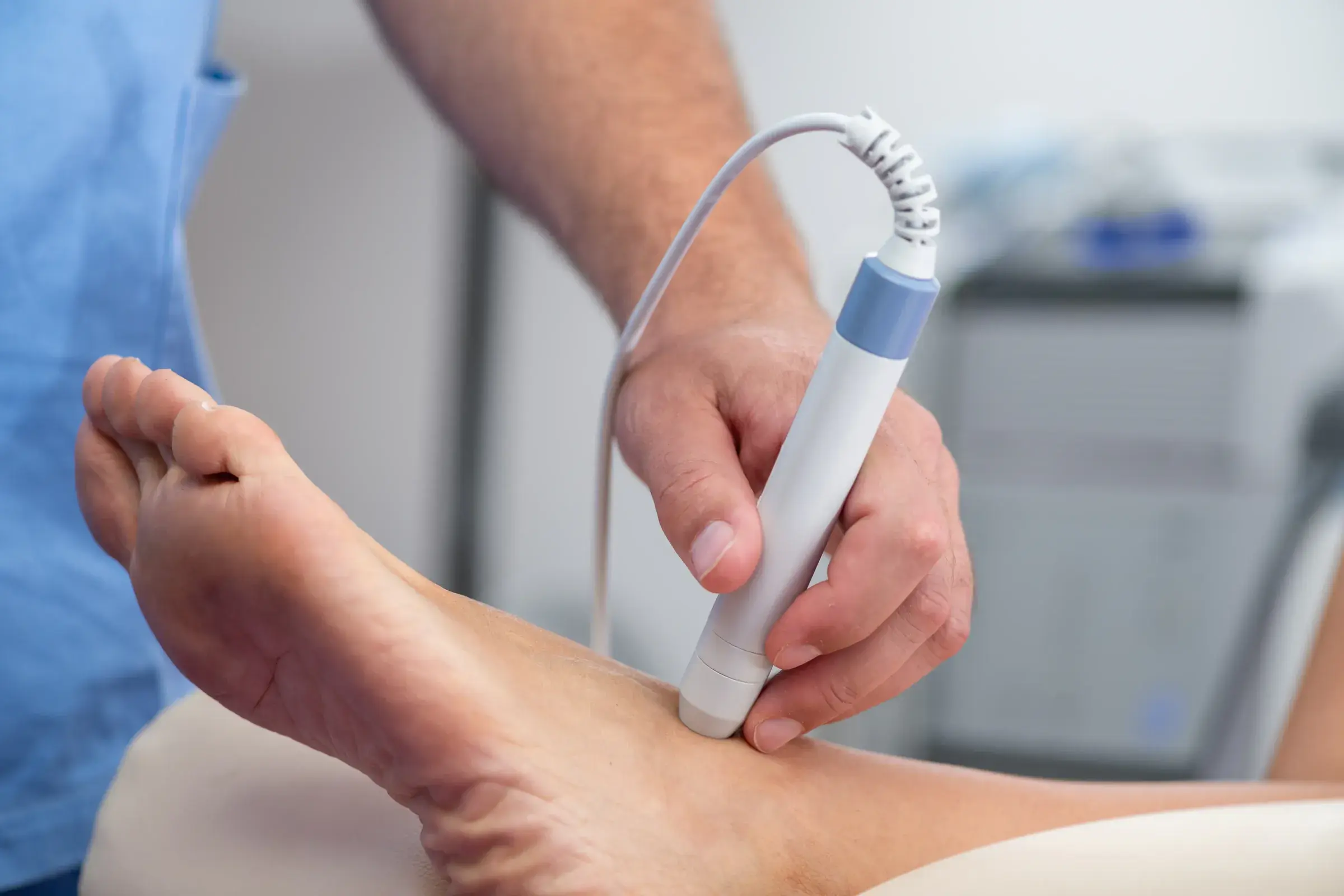
Radial or focused shockwave. Radial devices spread energy over a wider, shallower area. Focused devices concentrate it deeper, in a smaller spot. The equipment, and sometimes the price, differs, so ask which type a clinic uses so you’re comparing like with like.
The condition. One sore spot on the heel is a different job from a shoulder tendon or pain in two areas. Larger or multiple treatment areas can mean longer sessions or more of them.
How many sessions you need. Most people need 3 to 5 weekly sessions of 10 to 20 minutes. Long-standing problems may need more. The total for a full course tells you far more than the price of a single visit.
Also check what’s included. Is the evaluation separate? Are follow-up checks part of the price? Is other care, such as chiropractic treatment for the mechanics behind the problem, billed separately?
Some quotes cover shockwave alone. Others include the evaluation and treatment of the joints and muscles that overloaded the tissue. Neither is wrong, but they aren’t the same thing, so compare what you’re actually getting.
Does insurance cover shockwave therapy?
Often, no. Many insurance plans don’t cover shockwave therapy for tendon or heel pain, and coverage varies by plan and diagnosis. The only way to know for sure is to ask your insurer.
If a plan does cover it, coverage may be limited to specific diagnoses, or only after other treatments have been tried. Ask what conditions must be met.
When you call, ask three things:
- Does my plan cover extracorporeal shockwave therapy for my specific diagnosis?
- Does it need prior authorization?
- Can I submit an out-of-network claim myself, and what documentation do you need?
Ask us what paperwork we can provide for your claim. Even when a plan doesn’t pay, it’s better to know before you start than after.
Can you use an HSA or FSA for shockwave therapy?
In many cases, yes. Shockwave treats a medical condition, so it’s often an eligible expense for health savings accounts (HSA) and flexible spending accounts (FSA). Rules depend on your plan, so confirm with your plan administrator. Using pre-tax funds can make a full course easier to plan for.
Keep your receipts and any visit notes. Some plans ask for documentation showing the treatment was for a diagnosed condition.
Is there a downside to shockwave therapy?
The main downsides are cost, time and the fact that it doesn’t work for everyone. Physical side effects are usually mild: redness, tenderness, swelling or bruising for a day or two.
It also isn’t for everyone. Shockwave isn’t used during pregnancy, over a blood clot (DVT) or a malignancy, while you’re taking oral steroids, within two weeks of a steroid injection, or over open wounds or infection. Tell Dr. Tako about blood thinners, bleeding disorders, a pacemaker or nerve problems in the area.
The less obvious downside is patience. Shockwave works by stimulating repair, so the full effect often builds over two to three months after the course. If you need to be pain-free for a race next weekend, it isn’t a quick fix.
Is shockwave therapy worth the money?
For the right person, it can be. The real question isn’t the price of one session. It’s whether a short, defined course gives you a fair chance of getting past pain that other care hasn’t shifted.
Think about what stubborn pain is already costing you: missed runs or games, standing you can’t manage at work, months of treatments that help for a day and then fade. Against that, a course of 3 to 5 sessions with a clear plan and regular progress checks is easier to weigh.
It’s less likely to be worth it when the diagnosis is unclear, or when nothing changes about the load on the tissue. That’s why the evaluation comes first.
Who is shockwave therapy worth it for?
Shockwave is most likely to be worth it if you have chronic tendon or soft-tissue pain that hasn’t improved with good conservative care. That usually looks like:
- Stubborn heel pain. Plantar fasciitis that has lasted months despite rest, stretching, better shoes and insoles. Our guide to shockwave therapy for plantar fasciitis covers sessions, timelines and results, and our plantar fasciitis page covers the condition itself.
- Tendon pain that keeps flaring. Achilles, patellar, tennis or golfer’s elbow, or shoulder tendon pain. See our tendinitis page.
- People who want a non-invasive option. No needles, no anesthesia and no downtime, worth discussing with your doctor before considering more invasive options.
- People ready to change the load. You’re willing to follow a plan between sessions and address what overloaded the tissue in the first place.
Who is shockwave therapy not worth it for?
It’s probably not the right spend in these situations:
- Brand-new pain. A tendon flare from last week usually settles with load changes and time. Start there.
- You can’t change what’s causing it. Shockwave won’t outrun a big jump in mileage or a daily task that keeps overloading the same tendon.
- A contraindication applies. Pregnancy, oral steroids, a recent steroid injection, or any of the other reasons listed above.
- The pain isn’t a tendon or soft-tissue problem. Nerve pain, a possible fracture, a hot and swollen joint, or symptoms that need a medical doctor should be checked first.
- You need certainty. Results vary, and no honest clinic can promise shockwave will work for you.
What should you ask before paying for shockwave therapy?
Before you commit to a course, ask:
- Is shockwave the right treatment for my diagnosis, and why?
- Do you use radial or focused shockwave?
- How many sessions do you expect, and what’s the total cost?
- What happens if I’m not improving after a few sessions?
- What else is part of the plan to deal with what overloaded the tissue?
Those are the questions Dr. Tako answers at your evaluation. If he doesn’t think you’re a good candidate, he’ll tell you, and suggest what to try instead. To get started, visit our new patients page or read more about EPAT shockwave therapy.

Dr. Meir Tako, DC, CCSP
Sunnyvale chiropractor since 1998, Certified Chiropractic Sports Practitioner and competitive runner. About Dr. Tako →
Educational content; not a substitute for medical advice. Individual results vary.